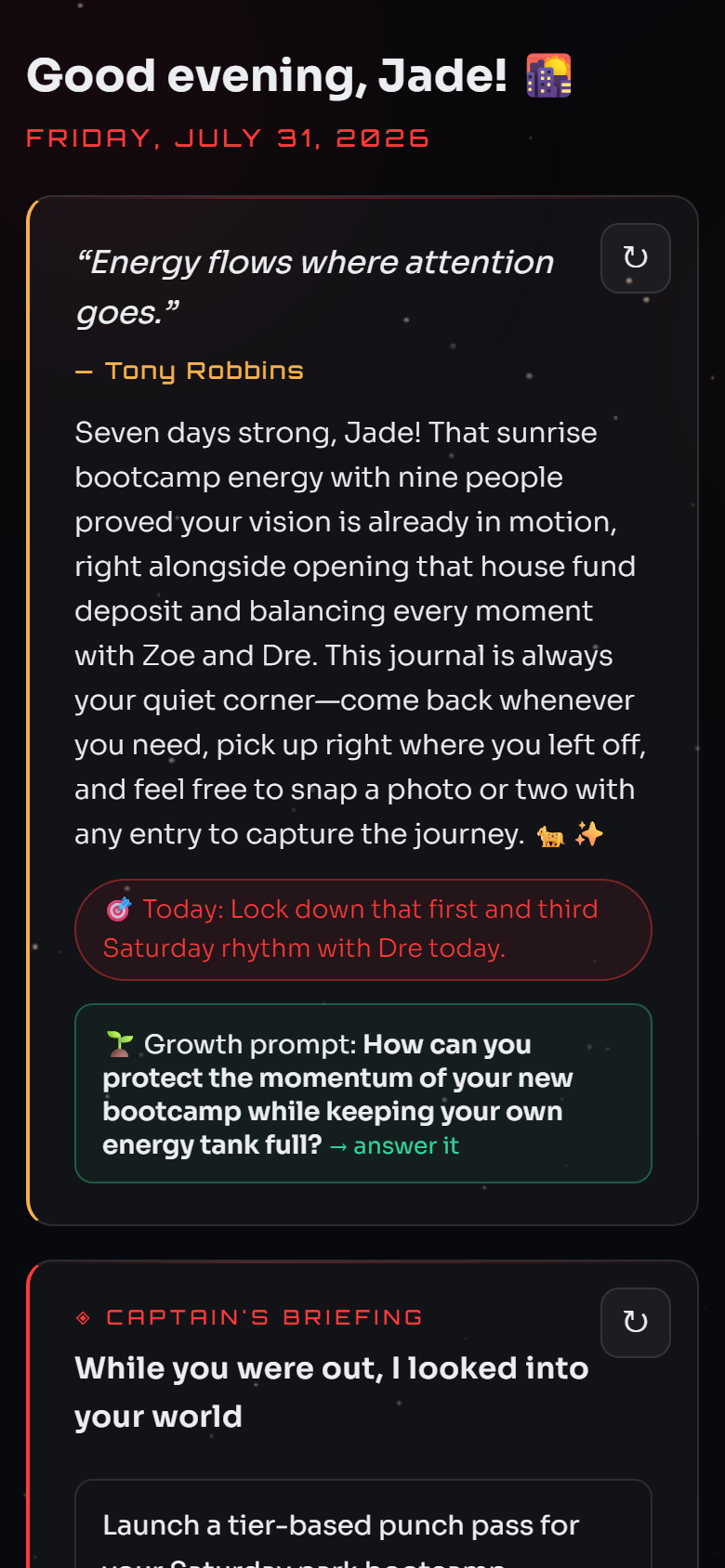
A FIVEPILLAR MINDSET visual created for this guide. The practical journal exercise appears below.
The Practical Reality of Emotional Courage
Many people confuse emotional suppression with discipline, believing that burying frustration, fear, or exhaustion is a sign of toughness. In truth, avoiding your real state creates an internal tax that compromises your performance, physical health, and personal relationships. Why emotional honesty builds real strength comes down to objective reality: you cannot fix a situation or correct a personal behavior if you refuse to acknowledge it exists. True strength is not the absence of difficult emotions, but the willingness to look at them directly without defensiveness or self-deception. When you name your fear or acknowledge burnout, you transition from passive coping to active leadership over your life. Taking complete ownership of your internal state prevents small unresolved conflicts from turning into chronic stress or destructive habits. Facing what you feel requires real courage, but it provides the foundation for genuine self-reliance, consistent growth, and unshakeable clarity in everyday decisions.
The private daily writing workspace in FIVEPILLAR MINDSET. Use the workbook actions in this guide to carry an exercise into your own private entry.
Core Pillars of Honest Self-Assessment
Developing emotional honesty requires practical habits that transform how you evaluate yourself and interact with others every day.
Expanding Emotional Vocabulary
Moving beyond basic labels like 'good' or 'bad' allows you to identify precise emotional states such as grief, overload, or resentment, leading to clearer responses.
Owning Personal Responsibility
Stopping the habit of blaming external circumstances forces you to examine your own choices, reactions, and boundaries in difficult situations.
Direct Relationship Communication
Expressing needs and boundaries with clarity prevents resentment from festering and builds transparent, trust-filled relationships.
Recognizing When to Reach Out
Acknowledging personal limits and seeking guidance or evidence-based support resources is a sign of practical self-awareness rather than weakness [S1].
A Daily Process for Cultivating Emotional Truth
Integrating emotional honesty into daily life is a deliberate practice that involves pausing, precise naming, and taking immediate responsibility.
Step 1: Pause and Audit Your Physical Tension
Notice bodily cues like a tight jaw or shallow breathing, which signal unacknowledged frustration or stress before your mind rationalizes it away.
Step 2: Name the Exact Feeling Without Judgment
Identify the specific emotion driving your reaction without calling yourself weak or making excuses for your discomfort.
Step 3: Separate Facts from Internal Narratives
Distinguish between objective events that occurred and the dramatic or defensive stories your ego constructed around those events.
Step 4: Choose a Responsible Action Step
Decide on one constructive action, such as adjusting a daily habit, holding an honest conversation, or seeking professional support [S1].
Strengthening Relationships and Knowing When to Seek Help
Emotional honesty profoundly transforms personal and professional relationships. When you stop hiding your vulnerabilities, you invite authentic connection and dissolve the wall of defensiveness that causes persistent interpersonal conflict. However, emotional honesty also means recognizing when overwhelming emotional challenges require external guidance. Coping with deep distress, mental health challenges, or substance use demands evidence-based strategies and compassionate care rather than isolated self-reliance [S1]. Reaching out for professional resources or community support is not a concession of defeat; it is an act of ultimate accountability to your own life and well-being [S1]. True discipline includes recognizing human limits and engaging structured support systems when necessary to maintain recovery, focus, and personal health [S1].
Try This in Your Journal
Make a note about this in your journal using these tailored reflection steps to practice emotional honesty within your private journal app [F1].
1. Speak Your Unfiltered Truth with Voice Input
Record a short hands-free voice note speaking candidly about a challenge you faced today, knowing public articles are never auto-copied to entries [F1][F2].
2. Log Your Emotion and Habit Context
Track your current mood alongside habit compliance and searchable library tags for key places or activities to notice patterns over time [F1][F5].
3. Ask Your Coach for Perspective
Ask your coach: 'Look at my recent reflections and highlight where I might be avoiding accountability.' The coach uses a 600-word summary of personal facts while keeping full entries separate [F1][F3][F4].
4. Review Your Progress in Monthly Reviews
Examine monthly reviews and habit trends to celebrate moments where vulnerability led to real personal growth and stronger discipline [F1].
Shaun 'Gotti' Williams emphasizes that real strength is built on truth, not posturing.
The FivePillar Standard
Begin Your Journey Toward Practical Self-Mastery
Build a permanent, private record of your personal growth, daily habits, and honest reflections with FivePillar Mindset [F1].
Why is emotional suppression often mistaken for strength?
Suppression is often confused with self-control, but hiding emotions merely delays dealing with reality and causes internal stress, whereas emotional honesty requires the courage to face facts directly.
How does emotional vocabulary help build mental resilience?
Identifying specific emotions allows you to choose precise actions rather than reacting impulsively to vague feelings of anger, anxiety, or frustration.
Can emotional honesty improve personal relationships?
Yes, expressing clear boundaries and honest feelings eliminates misunderstandings, stops passive-aggressive behavior, and fosters mutual trust.
Does journaling replace professional mental health support?
No, while reflection tools foster self-awareness, evidence-based coping strategies and professional care are essential for treating severe mental health or substance use challenges [S1].
FROM EDUCATION TO PERSONAL ACTION
Use this insight inside FIVEPILLAR MINDSET
This article remains public educational content. Inside the private journal, you decide whether to apply it to your own life, save a reflection or discuss it with your coach.
AI journal and contextual coachCapture the reflection in your own words and ask a coach that can use bounded, editable personal context.See how this feature works →
One Life Coach Operating SystemThe journal, memory, goals, timeline, map, favorites, coach and books are connected views—not separate journals.Explore the complete system →
Try it without an accountUse fictional sample data to feel the raw-words-to-coaching transformation. Nothing is saved and no paid AI call is made.Open the interactive demo →
Sources & verified facts
Product: A private AI journal with voice input, long-term condensed memory, coach chat, photos, places, habits, recovery-aware support, monthly reviews and a printable yearbook.
Private app behavior: Members choose what they write or save; public articles are not automatically copied into private journal entries.
Coach memory: The coach uses a bounded rolling summary capped at 600 words for lasting personal facts, while full private entries remain separate.
Memory exclusions: Generated drafts, blog copy, scripts, research text and the coach's prose are explicitly excluded from personal memory condensation.
Library tools: The journal supports searchable favorites for people, songs, dishes, recipes, places, books, activities, products and memories.
FivePillar Mindset is an educational self-reflection tool, not a clinical diagnostic tool or medical service. For mental health support or addiction recovery resources, visit SAMHSA.gov [S1].