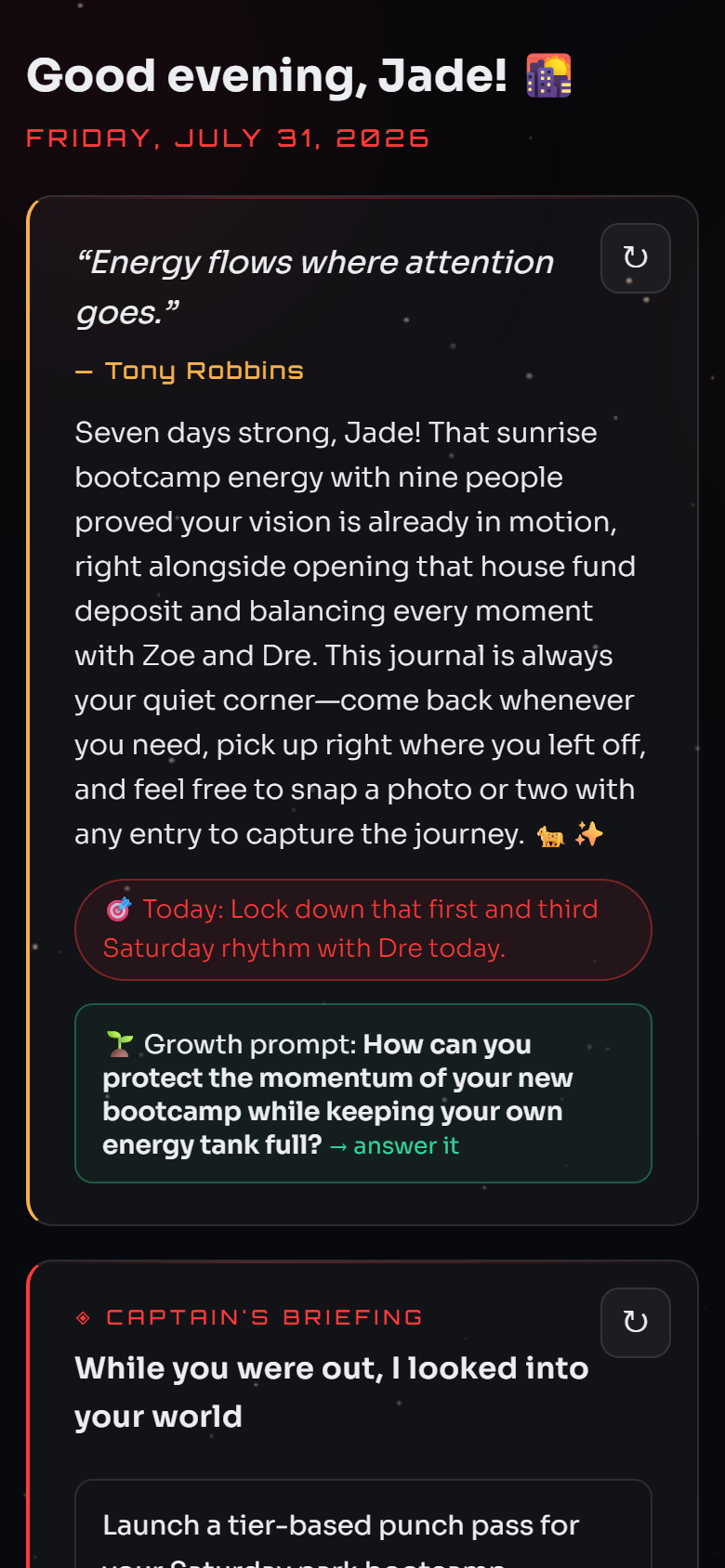
A FIVEPILLAR MINDSET visual created for this guide. The practical journal exercise appears below.
De-Escalating Anger Through Grounded Reflection
Anger often feels instantaneous, but physical warning signs always precede a reactive outburst. Research on expressive writing and structured journaling demonstrates that putting emotional experiences into text helps reduce psychological distress and aids emotional management [S2]. When an anger trigger occurs, your body sends immediate warning signals: a clenched jaw, sudden heat in the face, shallow breathing, or tension in the chest. Journaling serves as a circuit breaker between stimulus and reaction, providing the intentional pause needed to observe these somatic signals before taking action. Crucially, self-reflection tools support personal growth but are never a substitute for crisis intervention, therapy, or medical treatment [S1]. If emotional distress leads to feelings of danger, overwhelming aggression, or loss of control, immediate human or professional support must take precedence [S1]. By establishing a disciplined daily tracking ritual, you learn to identify early warning signs, evaluate whether your boundaries are being crossed, and make decisions grounded in objective truth rather than immediate reactivity [F1].
The private daily writing workspace in FIVEPILLAR MINDSET. Use the workbook actions in this guide to carry an exercise into your own private entry.
The 6-Step De-Escalation Protocol
1. Record Objective Facts
Write down strictly what occurred without judgment or assumption. Record only observable details that a neutral third party could verify.
2. Scan Body Signals
Identify physical indicators of rising anger, such as muscular tension, facial heat, or a racing pulse, building somatic self-awareness.
3. Identify Your Internal Narrative
Document the immediate story or assumption your mind created about the situation, acknowledging it as an internal interpretation rather than established truth.
4. Name Needs and Boundaries
Clarify which underlying need, personal boundary, or core value felt threatened during the interaction.
5. Choose a Safe Next Action
Define a safe, constructive next step, such as taking a temporary breather, stepping outside, or scheduling a calm discussion later.
6. Set Professional Circuit Breakers
Recognize when intense emotional responses exceed personal reflection practices and require urgent human or professional resources [S1].
Deconstructing the Internal Escalation Pattern
Somatic Awareness
Tracking body cues helps pinpoint the precise moment tension rises before physical or verbal outbursts occur.
Fact-Story Separation
Distinguishing external reality from internal mental narratives prevents runaway assumptions from dictating your decisions.
Boundary Enforcement
Defining clear boundaries allows you to protect your space and well-being constructively without resorting to spiteful reactions.
Try this in your journal
1. Log Voice Notes Immediately
Use voice input in your private journal right after a tense moment to capture raw facts and physical sensations while details are fresh [F1].
2. Tag Locations and Habits
Link entries to specific places or daily routines using searchable library tools to reveal environment-based trigger patterns over time [F5].
3. Leverage Bounded Coach Memory
Allow the coach feature to reference a secure, rolling summary capped at 600 words for personal context while full entries remain separate [F3].
4. Review Patterns Monthly
Examine monthly reviews to track emotional discipline, evaluate habit consistency, and keep a clean printable record of growth [F1].
True self-mastery is not about suppressing your emotions; it is about building the discipline to pause, observe your physical reaction, and choose your next move deliberately.
Grounded Wisdom on Emotional Discipline
Actionable Reflection Tools and AI Prompts
Make a note about this in your journal
Log your most recent emotional trigger today: record the objective trigger, two physical body signals you experienced, and one boundary to maintain next time.
Ask your coach
Prompt your coach chat: 'Review my recent trigger logs and help me identify recurring body signals or boundary violations across my entries.'
Identify Grounding Strategies
List clear circuit breakers—such as brief physical movement or tactical breathing—that help return your body to a calm baseline [S1].
Build Your Personal Record of Discipline
Developing long-term self-mastery requires concrete tools to record your journey, track daily habits, and reflect without friction [F1]. Leverage voice notes, structured reviews, and secure private memory to build a lifetime record of growth [F1][F3].
How does an anger trigger journal help prevent emotional outbursts?
Journaling builds somatic self-awareness, allowing you to recognize early physical warning cues—like muscle tension or heat—before you react impulsively [S2]. This establishes an intentional pause between the stimulus and your response.
Is journaling for anger triggers a replacement for professional care?
No. Journaling is a self-education and personal development tool. It does not replace therapy, medical treatment, or emergency mental health services [S1]. If emotional distress becomes dangerous or unmanageable, seek immediate human or professional care [S1].
How does FivePillar Mindset keep my journal entries and memory private?
Members retain control over what they write and save [F2]. The AI coach utilizes a bounded rolling memory summary capped at 600 words for context [F3], while generated drafts, blog articles, and coach responses are explicitly excluded from memory [F4].
FROM EDUCATION TO PERSONAL ACTION
Use this insight inside FIVEPILLAR MINDSET
This article remains public educational content. Inside the private journal, you decide whether to apply it to your own life, save a reflection or discuss it with your coach.
Connected memory systemKeep the entry, people, photographs, places and meaningful details connected to their original story.See how this feature works →
One Life Coach Operating SystemThe journal, memory, goals, timeline, map, favorites, coach and books are connected views—not separate journals.Explore the complete system →
Try it without an accountUse fictional sample data to feel the raw-words-to-coaching transformation. Nothing is saved and no paid AI call is made.Open the interactive demo →
Sources & verified facts
Product: A private AI journal with voice input, long-term condensed memory, coach chat, photos, places, habits, recovery-aware support, monthly reviews and a printable yearbook.
Private app behavior: Members choose what they write or save; public articles are not automatically copied into private journal entries.
Coach memory: The coach uses a bounded rolling summary capped at 600 words for lasting personal facts, while full private entries remain separate.
Memory exclusions: Generated drafts, blog copy, scripts, research text and the coach's prose are explicitly excluded from personal memory condensation.
Library tools: The journal supports searchable favorites for people, songs, dishes, recipes, places, books, activities, products and memories.
FivePillar Mindset is an educational self-reflection platform designed for personal growth, discipline, and journaling. It is not medical software, therapy, or emergency psychiatric intervention. If you are experiencing intense mental health distress or crisis, please consult professional medical services or SAMHSA support resources immediately.