A FIVEPILLAR MINDSET visual created for this guide. The practical journal exercise appears below.
Clarity Over Control: The Foundation of Clean Boundaries
Setting healthy boundaries is frequently misunderstood as demanding that other people change their behavior. True boundary setting is an exercise in personal discipline and self-governance rather than external control. When you establish a boundary, you are defining what actions you will take to protect your mental focus, emotional energy, and personal safety, regardless of how another person chooses to act. Aggression and threats emerge when we try to force compliance, while guilt arises when we mistakenly believe that taking care of our baseline needs is an act of hostility toward others.
Communicating a boundary requires direct language stripped of passive-aggressive commentary, unnecessary explanations, or emotional outbursts. By focusing strictly on your personal parameters, you remove the urge to argue or justify your position. Healthy boundaries establish clear expectations while preserving mutual dignity. Recognizing your personal limits allows you to handle conflict with composure, laying a foundation for sustainable habits, recovery support, and long-term relational self-respect.
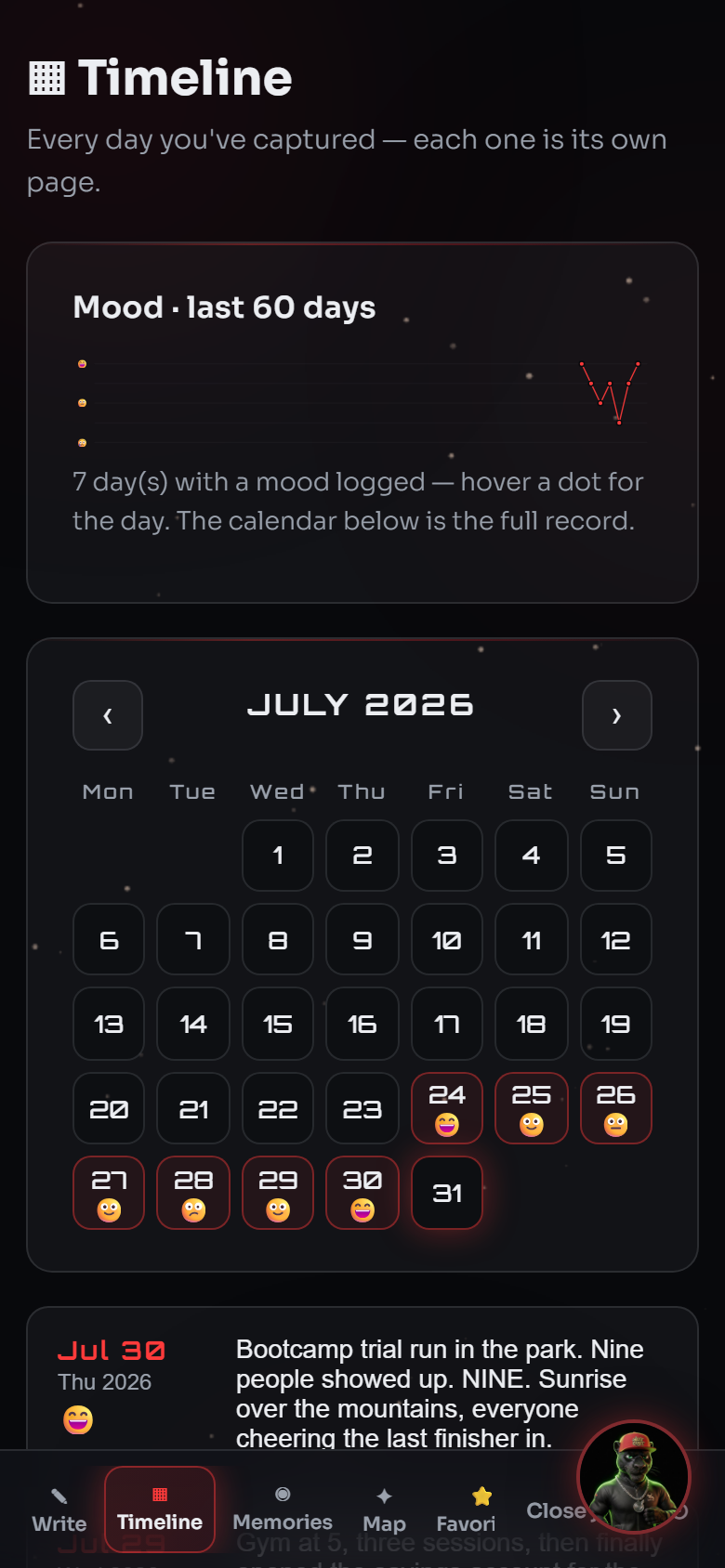
The searchable personal journal timeline in FIVEPILLAR MINDSET. Use the workbook actions in this guide to carry an exercise into your own private entry.
The Four Pillars of Clean Boundary Setting
Executing a boundary without hostility or backtracking requires a structured, repeatable method. Applying clarity, consequences, consistency, and repair ensures your limits are understood and maintained.
1. Articulate Concrete Clarity
Define your exact limit using straightforward language without emotional embellishment or defensiveness. State what is acceptable and what is not without demanding emotional validation.
2. Establish Predictable Consequences
Identify the precise action you will take if your limit is crossed. Ensure the consequence focuses entirely on your behavior, such as leaving the room or pausing a conversation.
3. Maintain Calm Consistency
Enforce the stated consequence immediately and neutrally every time the limit is breached. Inconsistency invites repeated boundary violations and creates relational confusion.
4. Offer a Pathway to Repair
Reiterate that the boundary exists to protect the relationship or your personal well-being, not to punish. Define clear conditions under which healthy engagement can resume safely [S1].
Overcoming Internal Friction: Managing Guilt and Emotional Pushback
Experiencing guilt after stating a boundary is a common reaction, particularly if you have historically prioritized external harmony over personal well-being. Guilt is often an indication that you are breaking an old habit of self-neglect, not an indicator that you have committed a wrongdoing. When external resistance occurs—such as guilt-tripping, anger, or silent treatment—it is crucial to remain grounded in your core values and resist the impulse to retreat or over-explain.
Developing resilience requires building effective coping mechanisms for emotional stress. Utilizing healthy stress-management practices, engaging with supportive communities, or seeking guidance from professional health networks can assist you in remaining firm during difficult conversations [S1]. Remind yourself that boundary enforcement is a long-term investment in your mental stability and individual accountability. Over time, maintaining calm consistency reduces relational friction and helps both parties understand the genuine operational rules of engagement.
Try this in your journal
Preparing your thoughts before an uncomfortable conversation lowers emotional reactivity. Use these steps in your private AI journal to process your feelings and refine your approach before communicating [F1].
Step 1: Conduct a Unfiltered Voice Dump
Use voice input to speak freely about the situation without filtering your raw emotions or self-censoring your initial frustration [F1].
Step 2: Define Your Actionable Boundary Statement
Refine your thoughts into a clear 'If / Then' statement focused solely on your response. Make a note about this in your journal to track your personal commitments [F1].
Step 3: Document Context and Locations
Log specific places or recurring scenarios where boundary violations occur using searchable library tools to identify patterns [F5].
Step 4: Rehearse with Coach Guidance
Ask your coach: 'How can I phrase this boundary clearly without sound defensive or aggressive?' Use the coach chat to roleplay response options grounded in your core values [F1, F3].
Navigating Safety, Privacy, and Relational Limits
Boundary setting must prioritize emotional and physical safety. Understanding privacy boundaries and knowing when external support is required keeps your personal environment safe.
Evaluating Physical and Emotional Safety
If enforcing a boundary results in threats, safety risks, or severe distress, focus on immediate personal safety and access professional community support resources [S1].
Complete Private Entry Isolation
Your private journal entries and reflection history remain separate from public content, ensuring your personal boundary prep stays completely confidential [F2].
Targeted Memory Exclusions
Drafted text, external copy, and coach prose are excluded from personal memory summaries, preserving clear personal records of your growth [F4].
Discipline is not about controlling the actions of others; it is about taking absolute responsibility for your own standards, responses, and environment.
A Grounded Standard for Personal Growth
Build Your Personal Record of Discipline and Growth
Establish lasting habits, document your personal boundaries, and track your self-growth journey with a private AI journal built for voice reflections, long-term memory, and monthly reviews [F1].
How do I set boundaries without feeling like a bad person?
Recognize that boundaries define your personal choices and responses, not other people's behavior. Reframing boundaries as self-care and self-respect helps eliminate unearned guilt.
What should I do if someone ignores my clear boundary?
Enforce the natural consequence you stated previously without arguing or escalating. Consistency in your actions demonstrates that your limits are firm and non-negotiable.
How can journaling help with setting boundaries?
Journaling allows you to clarify your thoughts, untangle emotional distress, and practice clear phrasing before engaging in difficult conversations [F1].
Is my reflection data kept completely private when writing about personal matters?
Yes. Private entries are fully controlled by you, and public marketing or educational articles are never automatically copied into your personal journal history [F2].
FROM EDUCATION TO PERSONAL ACTION
Use this insight inside FIVEPILLAR MINDSET
This article remains public educational content. Inside the private journal, you decide whether to apply it to your own life, save a reflection or discuss it with your coach.
Connected people and memoriesConnect reflections to the people and moments involved without automatically sharing private journal content.See how this feature works →
One Life Coach Operating SystemThe journal, memory, goals, timeline, map, favorites, coach and books are connected views—not separate journals.Explore the complete system →
Try it without an accountUse fictional sample data to feel the raw-words-to-coaching transformation. Nothing is saved and no paid AI call is made.Open the interactive demo →
Sources & verified facts
Product: A private AI journal with voice input, long-term condensed memory, coach chat, photos, places, habits, recovery-aware support, monthly reviews and a printable yearbook.
Private app behavior: Members choose what they write or save; public articles are not automatically copied into private journal entries.
Coach memory: The coach uses a bounded rolling summary capped at 600 words for lasting personal facts, while full private entries remain separate.
Memory exclusions: Generated drafts, blog copy, scripts, research text and the coach's prose are explicitly excluded from personal memory condensation.
Library tools: The journal supports searchable favorites for people, songs, dishes, recipes, places, books, activities, products and memories.