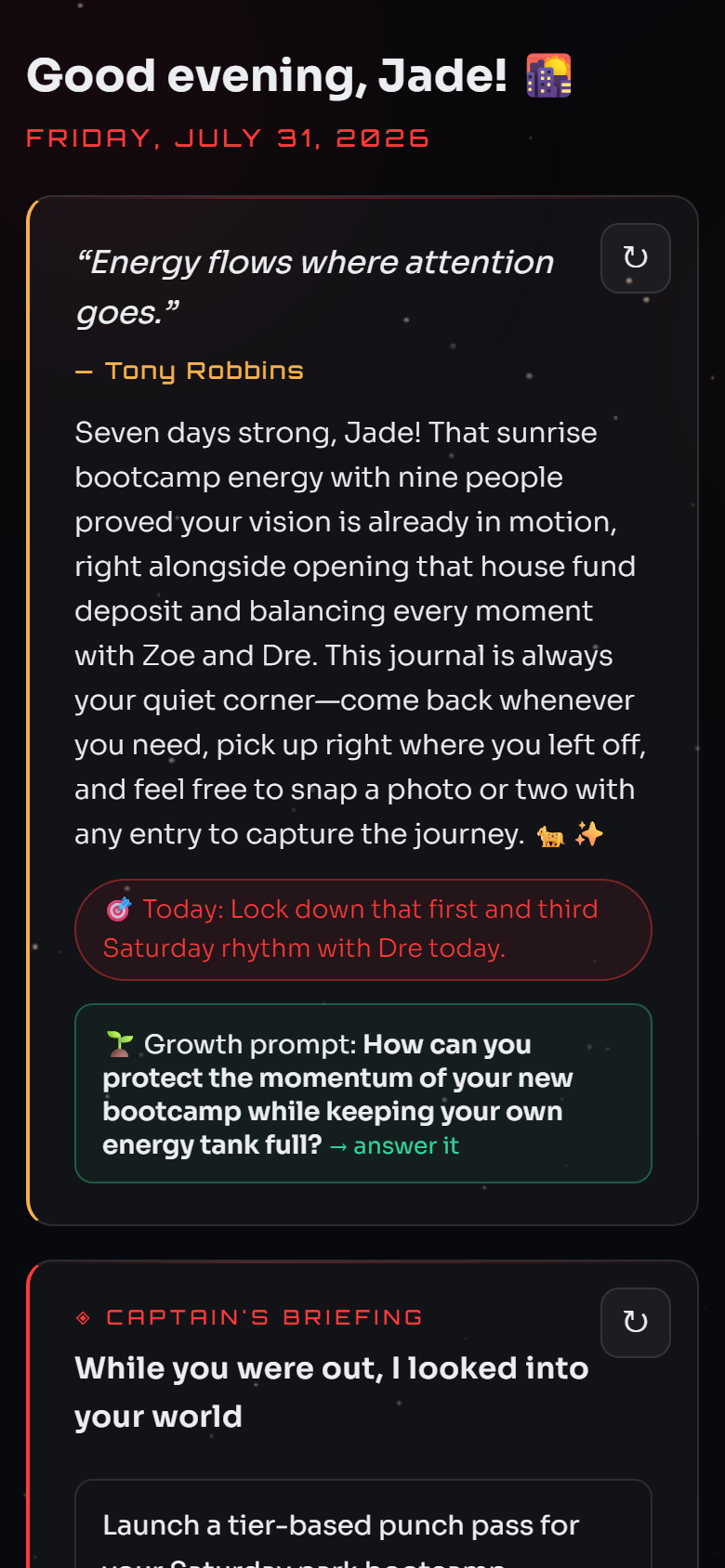
A FIVEPILLAR MINDSET visual created for this guide. The practical journal exercise appears below.
Preparing the Ground: Facts Over Emotional Noise
Difficult conversations usually fail long before the first word is spoken. When tension builds, human reaction often shifts toward defending personal ego or making assumptions about the other person's intentions. To hold a respectful conversation, you must first separate observable facts from your emotional reaction. Ask yourself what actually happened versus what narrative you constructed around the event. Preparing your facts ahead of time prevents the discussion from descending into vague accusations or defensive arguments. Grounded communication demands directness paired with restraint. Taking time to process your thoughts privately allows you to identify your core need—whether it is a boundary, an operational change, or mutual understanding. By establishing your facts, you enter the dialogue with emotional control rather than volatile reactivity, creating space for authentic resolution without sacrificing your personal standards or self-respect.
The private daily writing workspace in FIVEPILLAR MINDSET. Use the workbook actions in this guide to carry an exercise into your own private entry.
Four Grounded Steps for Respectful Dialogue
Navigating a high-stakes conversation requires structure and emotional discipline. Following a clear sequence helps keep the discussion focused on resolution rather than conflict escalation.
1. Choose Strategic Timing
Avoid bringing up complex issues when either party is tired, distracted, or operating under acute stress. Agree on a specific time so both participants can enter the conversation with clear heads.
2. State Objective Facts First
Open with neutral observations rather than loaded interpretations. Describe specific actions or circumstances directly, avoiding absolute terms like 'always' or 'never' that trigger immediate defensiveness.
3. Practice Active, Unbroken Listening
Allow the other person to respond completely without interruption. Listen to understand their prospective framing rather than formulating your rebuttal while they speak.
4. Define Clear Needs and Boundaries
Express directly what you require going forward and what behaviors you cannot accept. Clear boundaries protect relationships by establishing mutual expectations explicitly.
Navigating High Friction and Repair
Even with careful preparation, difficult conversations often generate friction. Respect does not mean avoiding tough truths or backing down from critical boundaries; it means holding your position without resorting to personal insults, contempt, or emotional manipulation. If the conversation becomes heated, pause the discussion briefly rather than reacting impulsively. De-escalation relies on acknowledging valid points without abandoning your own position. When genuine misunderstandings occur, acknowledge them immediately to establish a path toward repair. Long-term relationship health depends on your ability to work through discomfort rather than sweeping issues under the rug. Maintaining composure under pressure reflects true personal discipline and builds enduring trust over time.
Try This in Your Journal
Private reflection helps clarify your thoughts before entering a sensitive discussion. A structured journaling routine allows you to audit your feelings, outline your key points, and review your personal growth over time [F1]. Make a note about this in your journal before your next critical dialogue.
1. Record Your Raw Thoughts via Voice
Use voice input to speak out your raw feelings without filter [F1]. Members choose what they write or save, as public articles are not automatically copied into private entries [F2].
2. Distill Key Facts and Boundaries
Refine your entry into neutral facts and clear boundary statements. The coach uses a bounded rolling summary capped at 600 words for lasting personal facts, while draft text remains separate [F3][F4].
3. Search Personal History for Patterns
Use searchable favorites to track recurring people, places, or habits related to past conflicts [F5]. Reviewing past reflections provides perspective on ongoing relationship dynamics.
4. Rehearse with Your AI Coach
Ask your coach: 'Help me refine my statement so I can address this situation directly without sounding defensive.' Use coach chat to rehearse your tone and key points safely [F1].
Knowing Your Limits: When Not to Proceed Alone
Self-reliance and clear communication are essential life skills, but not every difficult conversation can or should be handled without external support. If a relationship involves continuous emotional volatility, substance use, or severe psychological distress, attempting a resolution alone may be ineffective or unsafe. Seeking structured support or external coping resources is an act of accountability, not weakness [S1]. Recognizing when a situation exceeds your personal scope allows you to set healthier boundaries and protect your mental well-being [S1]. Journaling serves as a minor supporting tool for tracking your personal reflections and habits, but it never replaces professional care, legal guidance, or human intervention [F1]. When safety or severe health issues are present, consult qualified community or medical resources immediately [S1].
True discipline is not about controlling others; it is about taking full responsibility for your own words, actions, and boundaries. Shaun 'Gotti' Williams' five-pillar philosophy emphasizes directness, self-mastery, and clear self-reflection without hype or superficial promises.
Grounded Accountability in Action
Build Daily Discipline with FivePillar Mindset
Take control of your personal growth, track your habits, and build a permanent record of your life journey. FivePillar Mindset provides a private AI journal with voice input, recovery-aware support, long-term condensed memory, monthly reviews, and a printable yearbook [F1].
How do I prepare for a difficult conversation without getting emotional?
Prepare by writing down objective facts before the meeting. Separating concrete events from emotional assumptions allows you to communicate your needs with directness and self-control.
What should I do if the other person becomes aggressive during the talk?
Maintain your composure and pause the discussion. State clearly that you want to continue the conversation respectfully when both parties are calm, setting a firm boundary against hostile behavior.
Can a private AI journal replace a counselor or professional support?
No. A private AI journal is a supporting tool for personal reflection, habit tracking, and organizing your thoughts [F1]. It does not replace professional care or medical resources when dealing with complex issues [S1].
How does FivePillar Mindset protect my private entries?
FivePillar Mindset gives members complete control over what they write or save, ensuring private journal entries remain separate from public content or bounded summary memory [F2][F3].
FROM EDUCATION TO PERSONAL ACTION
Use this insight inside FIVEPILLAR MINDSET
This article remains public educational content. Inside the private journal, you decide whether to apply it to your own life, save a reflection or discuss it with your coach.
Connected people and memoriesConnect reflections to the people and moments involved without automatically sharing private journal content.See how this feature works →
One Life Coach Operating SystemThe journal, memory, goals, timeline, map, favorites, coach and books are connected views—not separate journals.Explore the complete system →
Try it without an accountUse fictional sample data to feel the raw-words-to-coaching transformation. Nothing is saved and no paid AI call is made.Open the interactive demo →
Sources & verified facts
Product: A private AI journal with voice input, long-term condensed memory, coach chat, photos, places, habits, recovery-aware support, monthly reviews and a printable yearbook.
Private app behavior: Members choose what they write or save; public articles are not automatically copied into private journal entries.
Coach memory: The coach uses a bounded rolling summary capped at 600 words for lasting personal facts, while full private entries remain separate.
Memory exclusions: Generated drafts, blog copy, scripts, research text and the coach's prose are explicitly excluded from personal memory condensation.
Library tools: The journal supports searchable favorites for people, songs, dishes, recipes, places, books, activities, products and memories.
This article is for educational and self-reflection purposes only and does not constitute medical, mental health, or professional legal advice. If you are facing severe emotional distress or safety risks, reach out to professional support services immediately.