
Privacy and Control
Comparing Paper and Digital Journaling Formats
Choosing between a digital journal vs paper journal comes down to your personal priorities: immediate tactile presence versus fast capture, deep searchability, and structured memory aggregation. Paper journaling provides total offline isolation, sensory focus, and freedom from screen distractions. However, physical notebooks lack instant indexing, spatial flexibility for photos, and automated memory prompts. Digital journaling—specifically within FIVEPILLAR MINDSET—enables voice input for rapid capture, long-term condensed memory, and searchable records for people, places, and habits [F1, F5]. While systematic reviews demonstrate that reflective writing supports psychological well-being across various settings [S1], neither medium is a medical treatment or therapeutic cure [S1]. Instead, selecting the right format depends on whether your daily routine favors quiet pen-and-paper reflection or the mobile flexibility of audio journaling, automated monthly reviews, and bound physical yearbook exports [F1].
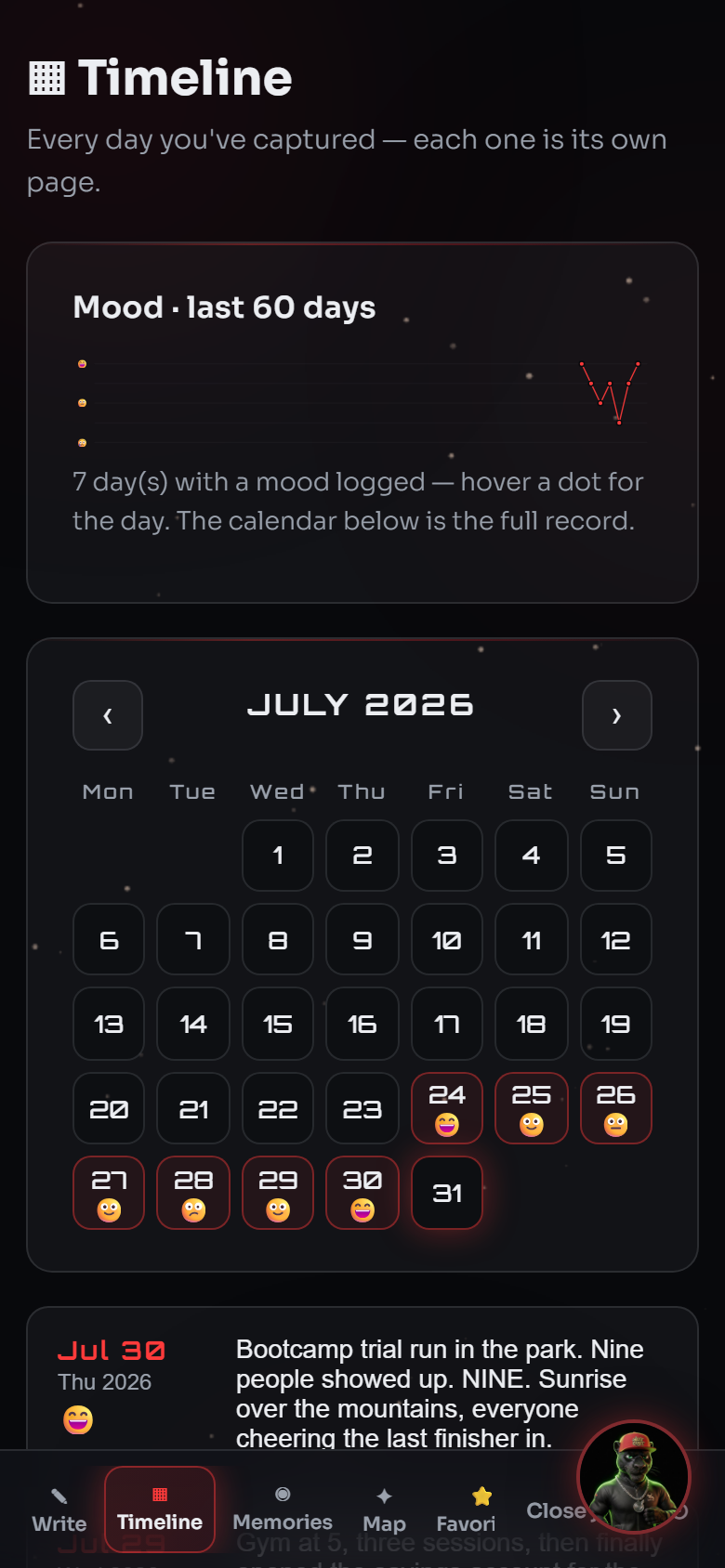
Comparing Key Features: Paper vs Digital
Evaluating your options across core functional areas helps determine which medium best serves your personal growth and daily discipline routines.
Searchability and Indexing
Finding specific entries in paper requires manual flipping. Digital platforms allow instant keyword searches across tagged places, books, activities, and memories stored in built-in library tools [F5].
Capture Speed and Media Integration
Handwriting encourages slow, deliberate reflection. Digital entries accommodate quick voice capture, daily photo attachments, habit logs, and location tagging for detailed real-time tracking [F1].
Reflection Depth, Preservation, and Well-Being
Preserving your personal history requires understanding how paper and digital mediums age over time. Physical notebooks carry an irreplaceable tactile intimacy, yet the U.S. National Archives notes that paper survival relies on strict environmental controls regarding humidity, light exposure, and storage materials [S2]. Digital journaling eliminates physical degradation risks through cloud backups and offers unique analytical tools, such as monthly reviews and habit tracking [F1]. Research on journaling shows measurable benefits for emotional self-regulation and stress reduction, though clinical literature emphasizes that self-directed writing supplements rather than replaces professional healthcare [S1]. To bridge the gap between digital convenience and physical longevity, FIVEPILLAR MINDSET combines mobile voice entry and bounded 600-word coach memory summaries with a printable yearbook export, ensuring your digital record can still become a physical family archive [F1, F3, S2].
Try This in Your Journal
Use these four concrete steps to establish a balanced daily self-reflection workflow using your digital journal tools.
1. Record an Audio Morning Reflection
Open your FIVEPILLAR MINDSET app and use voice input to speak your daily commitments, habit check-ins, or current mindset without worrying about handwriting speed [F1].
2. Tag Key Elements in Your Library
Log specific places, books, recipes, or people mentioned during your entry into your searchable library tools to make past memories instantly retrievable [F5].
3. Review Your Bounded Coach Summary
Check your coach chat to see how key personal facts are summarized into a focused 600-word memory bank that respects entry privacy [F3].
4. Export Your Annual Yearbook
At the end of the year, convert your digital entries, habit records, and photos into a printed yearbook to keep a tangible physical volume on your shelf [F1].
Decision Framework: When to Use Paper vs Digital
When deciding between formats, use paper when you need absolute disconnection from digital screens or prefer writing by hand to slow down your thoughts. Choose a digital journal when your lifestyle requires capturing thoughts on the go, tracking ongoing habits, or searching past years of entries instantly [F1, F5]. Make a note about this in your journal today: reflect on where screen fatigue hinders your practice versus where rapid voice input saves your daily streak [F1]. If you are uncertain which approach fits your current goals, ask your coach during your next session how structured monthly reviews and 600-word memory summaries can keep you accountable [F1, F3]. Remember that no journal tool guarantees behavioral change on its own; consistent daily reflection and personal discipline remain the primary drivers of growth.
Journaling isn't about artistic penmanship or digital vanity—it's about holding an honest mirror to your life every single day so you can build discipline and track your truth.
Start Your Digital and Physical Record
Combine the rapid capture of voice input, habits, and coach memory summaries with the option of a printable yearly volume. Experience how FIVEPILLAR MINDSET keeps your private journal organized, searchable, and preserved [F1].
Explore FIVEPILLAR MINDSETQuestions
Is a digital journal better than a paper journal for privacy?
Paper journals offer complete offline physical privacy, while digital journals offer encryption and access controls. FIVEPILLAR MINDSET ensures private entries remain distinct from coach memory summaries [F3] and site reading behavior [F2].
Can I convert my digital journal entries into a physical book?
Yes. FIVEPILLAR MINDSET offers a printable yearbook feature, allowing you to export your photos, habit logs, and entry text into a physical book for long-term archive storage [F1].
Does journaling replace professional mental health support?
No. While systematic reviews indicate journaling supports psychological well-being and stress management [S1], self-directed writing is an educational and personal growth tool, not a medical treatment [S1].
How does voice journaling compare to traditional writing?
Voice input allows rapid, spontaneous audio capture on the go, making it easier to log detailed reflections when writing by hand is inconvenient or time-prohibitive [F1].
FROM EDUCATION TO PERSONAL ACTION
Use this insight inside FIVEPILLAR MINDSET
This article remains public educational content. Inside the private journal, you decide whether to apply it to your own life, save a reflection or discuss it with your coach.
AI journal and contextual coachCapture the reflection in your own words and ask a coach that can use bounded, editable personal context.See how this feature works →
One Life Coach Operating SystemThe journal, memory, goals, timeline, map, favorites, coach and books are connected views—not separate journals.Explore the complete system →
Try it without an accountUse fictional sample data to feel the raw-words-to-coaching transformation. Nothing is saved and no paid AI call is made.Open the interactive demo →
Sources & verified facts
- Product: A private AI journal with voice input, long-term condensed memory, coach chat, photos, places, habits, recovery-aware support, monthly reviews and a printable yearbook.
- Private app behavior: Members choose what they write or save; public articles are not automatically copied into private journal entries.
- Coach memory: The coach uses a bounded rolling summary capped at 600 words for lasting personal facts, while full private entries remain separate.
- Memory exclusions: Generated drafts, blog copy, scripts, research text and the coach's prose are explicitly excluded from personal memory condensation.
- Library tools: The journal supports searchable favorites for people, songs, dishes, recipes, places, books, activities, products and memories.
- Efficacy of journaling in the management of mental illness: systematic review and meta-analysis
- U.S. National Archives: How to Preserve Family Archives
This article is for educational and self-improvement purposes only and does not constitute medical advice or psychological diagnosis.