Physical Fatigue Signals
Noticing muscular tension, sluggish morning start times, and lowered training capacity before injury or total exhaustion occurs.
True discipline requires managing your energy before exhaustion takes over. Learn how deliberate recovery sustains long-term personal growth.

High performers often fall into the trap of treating rest as something earned only after complete physical and mental exhaustion. When you view recovery as a concession to defeat rather than an essential component of training, your habits become erratic and fragile. Sustainable discipline requires recognizing that your body and mind operate within baseline physical and emotional limits. Integrating structured downtime keeps your energy steady, allowing you to execute daily commitments without falling into sudden burnout. Building active coping strategies, maintaining predictable sleep schedules, and setting reasonable daily boundaries are recognized ways to maintain overall well-being and stay grounded during stress [S1]. When rest is planned intentionally, it ceases to be an emergency brake and becomes a core tool for execution. By evaluating your energy levels daily, you treat rest as an input that fuels future work rather than an exit route from effort. This shift in perspective turns discipline into a long-term lifestyle rather than a short burst of strain that ends in collapse.
To practice rest as a disciplined choice, you must recognize early warning signs that indicate rising strain before performance degrades. Waiting until you are completely depleted leads to passive recovery—such as mindless scrolling or physical collapse—which fails to restore mental focus. By actively monitoring daily physical signals, mood shifts, and task completion rates, you gain real-time visibility into your current operational threshold. Incorporating healthy coping mechanisms, establishing standard routines, and recognizing personal stress triggers are foundational practices supported by public health guidelines for long-term well-being [S1]. Tracking these variables helps you make calibrated adjustments to your workload schedule rather than making impulsive decisions when exhausted. Sustainable personal growth relies on proactive energy maintenance rather than reactive recovery after a breakdown. When you manage your output deliberately, rest functions as a force multiplier that sharpens focus, fortifies emotional resilience, and keeps your long-term goals on track.
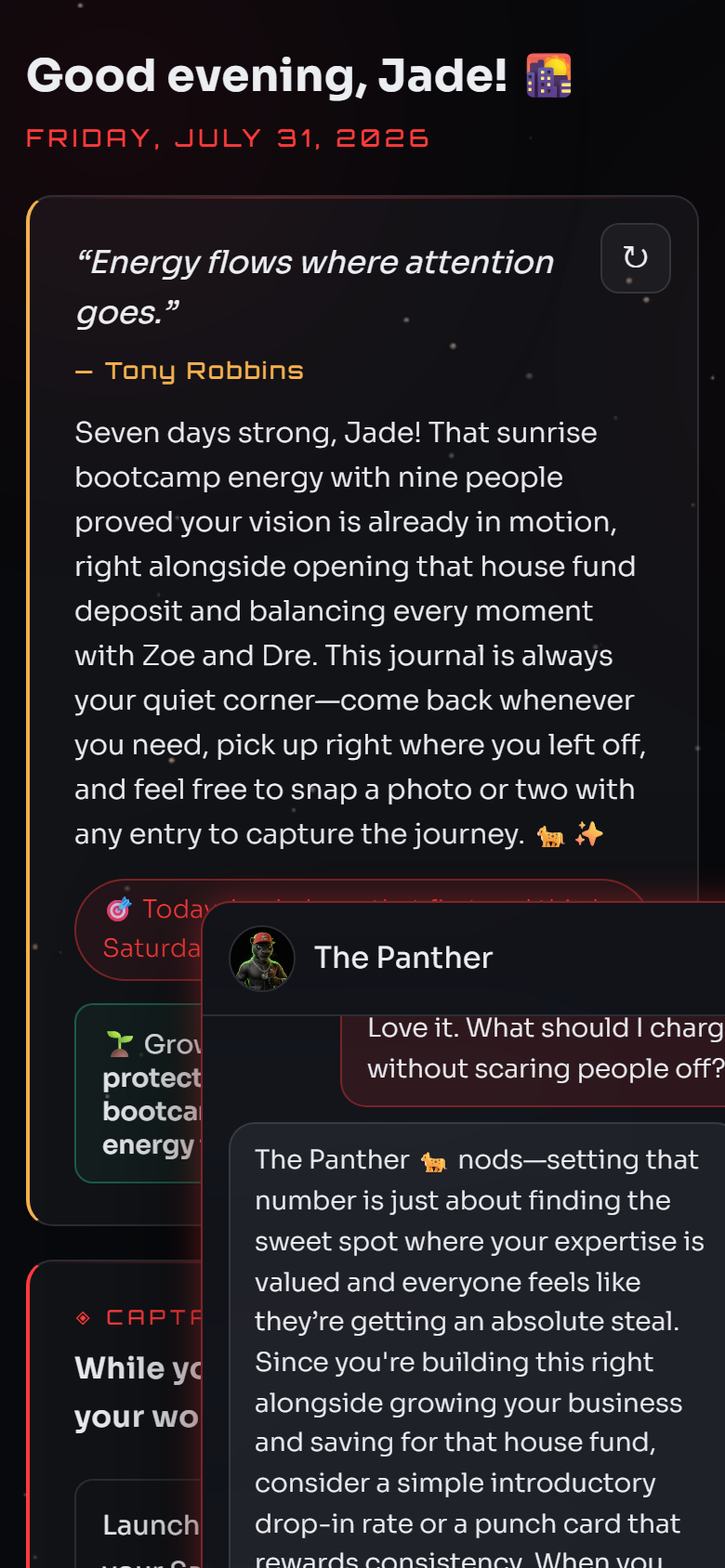
Developing a clear record of your energy and recovery requires structured daily reflection. Using a private AI journal with voice input, recovery-aware support, and habit tracking allows you to capture your true state in real time without friction [F1]. When you document your daily fatigue levels, wins, and stressors, you build an objective record of your personal baseline. This practice helps you decouple rest from guilt by showing the direct correlation between structured downtime and high-quality output. Make a note about this in your journal whenever you feel your energy drop mid-week. Ask your coach: 'How can I adjust my weekly habit goals to include structured recovery without losing momentum?' This ongoing dialogue ensures your growth plan remains realistic, grounded, and aligned with your actual capacity.
While structured self-reflection, personal journaling, and disciplined rest routines are powerful tools for self-improvement, they are not remedies for clinical conditions. Personal journaling and educational mindset frameworks do not provide medical diagnosis, psychological treatment, or clinical intervention. If you experience persistent mental health challenges, severe emotional distress, or substance use issues, it is essential to seek guidance from qualified healthcare professionals. Organizations like the Substance Abuse and Mental Health Services Administration (SAMHSA) provide comprehensive public resources, educational materials, and confidential support helplines to help individuals connect with certified treatment providers and support networks [S1]. Recognizing when personal effort and self-directed strategies are insufficient is itself a critical form of self-awareness and discipline. Using personal tracking tools alongside professional care ensures you build a safe, well-rounded foundation for long-term health and growth.
Shaun 'Gotti' Williams' five-pillar philosophy emphasizes that true personal strength comes from self-mastery, internal accountability, and realistic daily execution. Pushing past reasonable physical and mental boundaries without structured recovery is not discipline; it is reckless management of your life's most valuable asset—your daily energy. When you treat recovery as an active, deliberate decision, you build a resilient foundation that survives adversity, heavy obligations, and long-term goals. FivePillar Mindset provides grounded personal growth principles without hype or unrealistic promises, helping you take full ownership of your daily routines, honor your boundaries, and maintain a permanent record of your personal evolution over time. By aligning high-intensity effort with deliberate recovery, you protect your long-term capacity to lead, perform, and honor your commitments consistently.
Documenting personal struggles, daily energy dips, and habit consistency requires total privacy and strict data control. The FivePillar Mindset journal is engineered around strict boundaries to keep your self-reflection confidential. Members choose exactly what they write or save; public articles or educational materials are never automatically copied into personal journal entries [F2]. To maintain contextual continuity without exposing full logs, the coach chat utilizes a bounded rolling summary capped at 600 words for lasting personal facts, while your full private entries remain completely separate [F3]. Additionally, system rules ensure that generated drafts, blog copy, scripts, research text, and coach prose are explicitly excluded from personal memory condensation [F4]. Members can also maintain searchable favorites for people, songs, dishes, places, books, activities, and memories to construct a custom recovery toolkit [F5].
True discipline is not measured by how fast you burn out, but by how consistently you show up over months and years. FivePillar Mindset gives you the tools, privacy, and structure needed to document your daily life, track habits, and maintain steady personal growth over time. With private voice input, recovery-aware coach chat, long-term condensed memory, monthly reviews, and a printable yearbook, you can build an authentic, lasting record of your evolution without sacrificing your mental or physical health [F1]. Take full control of your daily routines, respect your operational limits, and establish a recovery-aware lifestyle grounded in direct accountability and self-mastery. Start documenting your journey today, listen to your physical signals, and build a sustainable framework for lifelong growth.
Explore FivePillar MindsetRest is part of discipline because maintaining long-term effort requires proactive energy management. Resting before total exhaustion prevents burnout, protects health, and maintains consistent performance over time [S1].
The journal offers private voice input, habit tracking, recovery-aware coach chat, monthly reviews, and searchable library tools to monitor fatigue and restorative activities [F1], [F5].
No. Journaling is a tool for self-reflection and habit tracking. It does not provide medical diagnoses or therapy. Individuals experiencing severe emotional distress or health issues should seek qualified professional support, such as services offered by SAMHSA [S1].
FROM EDUCATION TO PERSONAL ACTION
This article remains public educational content. Inside the private journal, you decide whether to apply it to your own life, save a reflection or discuss it with your coach.