A FIVEPILLAR MINDSET visual created for this guide. The practical journal exercise appears below.
Why Balance Demands Attention, Not Perfection
When adults pursue personal growth, habit change, or recovery, they often fall into an all-or-nothing mindset. They treat life like a strict performance contract where a single missed workout, delayed task, or emotional lapse signals absolute failure. Real equilibrium across the five core areas of life—spiritual, mental, emotional, financial, and physical—does not require flawless execution every single day. Instead, it requires sustained, realistic attention. Perfectionism breeds anxiety, secretiveness, and eventual exhaustion, whereas deliberate attention fosters self-honesty, steady course corrections, and lasting resilience. In holistic growth and recovery frameworks, such as SAMHSA's four major dimensions of recovery—health, home, purpose, and community [S1]—progress is sustained through daily choices and supportive environments rather than rigid perfection. When you drop the demand to be flawless, you reclaim cognitive energy to focus on what actually works: checking in with yourself regularly, noticing patterns without harsh judgment, and taking small, direct steps toward alignment in every pillar of your life.
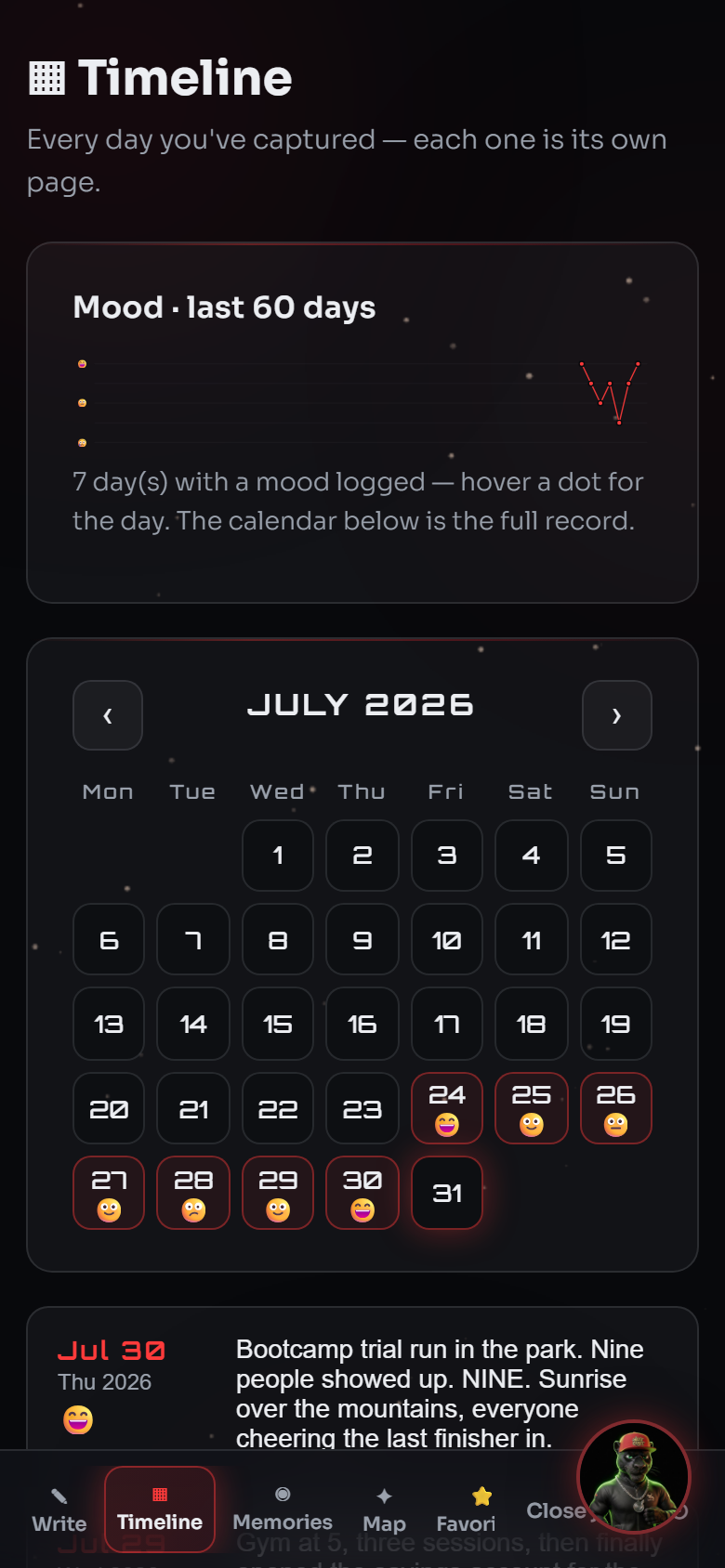
The searchable personal journal timeline in FIVEPILLAR MINDSET. Use the workbook actions in this guide to carry an exercise into your own private entry.
The Five Pillars of Life Broken Down
To build long-term stability without exhausting your mental reserves, it helps to understand how these five foundational areas function together. Neglecting one pillar eventually stresses the others, but demanding perfection across all five creates unsustainable pressure. Focus instead on giving each pillar direct, honest awareness.
Spiritual Pillar
Connecting with your core values, personal ethics, and deeper sense of purpose. This is about anchoring your daily actions to a clear sense of meaning and personal self-respect.
Mental Pillar
Sharpening your intellect, cultivating focus, and protecting your cognitive health. Mental clarity demands lifelong learning, constructive curiosity, and clean boundaries.
Emotional Pillar
Identifying, processing, and regulating your feelings. Emotional attention means permitting dynamic human experiences without allowing reactive impulse to dictate actions.
Financial Pillar
Establishing proactive stewardship over your income, obligations, and long-term security. Financial clarity calms background anxiety and safeguards personal independence.
Physical Pillar
Honoring your body through sleep, intentional movement, proper nourishment, and rest. Physical baseline health fuels your capacity to deal with mental and life demands.
Overcoming the Perfectionism Trap in Personal Growth
Perfectionism is frequently a subtle manifestation of fear. It suggests that if you cannot complete an intense ninety-minute exercise session, you should not walk around the block, or that an unbudgeted expense destroys your entire financial plan. This rigid mindset damages long-term personal development and recovery. Research from SAMHSA highlights that individual purpose and health develop through self-directed choices and sustained routine over time [S1]. When viewed through a five-pillar framework, equilibrium replaces perfection as the explicit goal. A shift toward attention allows you to recognize when your emotional energy is low so you can calibrate physical demands, or when your financial pillar needs structured review so you can restore clarity. Structured journaling serves as a practical, objective tool in this process, providing a calm space to notice shifts across pillars. However, journaling is an educational self-reflection practice—it is not a substitute for clinical treatment, professional therapy, or financial advisory services when deeper specialized support is required.
Try this in your journal
Follow these structured, actionable steps in your private journal to audit your five pillars, establish realistic intentions, and maintain a clear record of your personal evolution without falling into rigid perfectionism.
1. Record a Five-Pillar Voice Note
Use voice input in your journal [F1] to speak candidly about where your energy went today. Describe how your body feels, your emotional state, and any financial or mental wins. Make a note about this in your journal.
2. Prompt Your AI Coach
Ask your coach: 'Based on my five pillars, where am I over-exerting myself and which area needs quieter attention this week?' The coach uses a bounded rolling summary capped at 600 words [F3] to offer focused insights while full private entries remain completely separate [F3].
3. Catalog Your Supportive Anchor Places and Habits
Log your favorite quiet spots, recovery habits, or grounding books in your searchable library [F5]. Tracking supportive environments strengthens your sense of home and purpose [S1].
4. Review Your Monthly Reflection
At the end of thirty days, examine your automated monthly review [F1]. Look for trends across spiritual, mental, emotional, financial, and physical notes to celebrate steady consistency over quick perfection.
Shaun 'Gotti' Williams established the Five-Pillar philosophy on a simple principle: discipline is not about being flawless; it is about showing up daily to take ownership of your narrative. When you abandon the illusion of perfection, you create an enduring record of genuine growth. Your private journal is your space to speak your truth, refine your habits, and document your path across every pillar of your life [F1].
A Message on Grounded Consistency
Building a Permanent Record of Your Evolution
Tracking progress across five distinct areas requires reliable, privacy-focused software that supports unvarnished self-reflection. FivePillar Mindset provides a personal environment built for genuine self-discovery and discipline [F1].
Private AI Journal & Voice Input
Capture candid reflections on the go using spoken voice input or text. You maintain full control over what you write or store in your private entries [F1][F2].
Smart Bounded Memory
The AI coach remembers personal facts through a capped 600-word rolling summary [F3], while generated drafts, blog copy, scripts, and research text are explicitly excluded from memory [F4].
Searchable Favorites Library
Organize resources that sustain your health and growth, including searchable favorites for people, songs, recipes, places, books, and activities [F5].
Monthly Reviews & Printable Yearbook
Synthesize your journey with automated monthly reviews and compile a tangible, printable yearbook that preserves your life story over time [F1].
Begin Your Five-Pillar Reflection Today
Ready to move past unrealistic perfectionism and develop grounded, multi-pillar awareness? Take control of your daily routines, honor your recovery, and build a lasting record of your life's work. Experience private AI voice journaling, structured coach insights, and long-term memory designed for realistic personal growth.
What are the five areas of life that need attention?
The five core areas are spiritual, mental, emotional, financial, and physical well-being. Giving each pillar honest, recurring attention creates balanced living without the stress of perfectionism.
Why is perfectionism harmful to personal growth and recovery?
Perfectionism creates an all-or-nothing mindset that leads to shame, secrecy, and abandonment of routines when setbacks occur. Focusing on attention fosters continuous adjustments and long-term resilience across health and purpose [S1].
How does the AI coach maintain privacy while summarizing my journal?
The coach relies on a bounded rolling summary capped at 600 words for essential facts while keeping full private entries separate [F3]. Drafts, scripts, research text, and coach prose are explicitly excluded from memory condensation [F4].
Does journaling replace professional mental health treatment or financial advice?
No. Journaling and wellness education are self-reflection tools designed to support personal clarity and daily discipline. They do not diagnose, treat, or replace care from licensed medical, clinical, or financial professionals.
FROM EDUCATION TO PERSONAL ACTION
Use this insight inside FIVEPILLAR MINDSET
This article remains public educational content. Inside the private journal, you decide whether to apply it to your own life, save a reflection or discuss it with your coach.
AI journal and contextual coachCapture the reflection in your own words and ask a coach that can use bounded, editable personal context.See how this feature works →
One Life Coach Operating SystemThe journal, memory, goals, timeline, map, favorites, coach and books are connected views—not separate journals.Explore the complete system →
Try it without an accountUse fictional sample data to feel the raw-words-to-coaching transformation. Nothing is saved and no paid AI call is made.Open the interactive demo →
Sources & verified facts
Product: A private AI journal with voice input, long-term condensed memory, coach chat, photos, places, habits, recovery-aware support, monthly reviews and a printable yearbook.
Private app behavior: Members choose what they write or save; public articles are not automatically copied into private journal entries.
Coach memory: The coach uses a bounded rolling summary capped at 600 words for lasting personal facts, while full private entries remain separate.
Memory exclusions: Generated drafts, blog copy, scripts, research text and the coach's prose are explicitly excluded from personal memory condensation.
Library tools: The journal supports searchable favorites for people, songs, dishes, recipes, places, books, activities, products and memories.
This article is for educational and self-reflection purposes only. Journaling and wellness coaching tools do not constitute medical, clinical, mental health, or professional financial advice.