When Responsibility Turns into Shame: Moving from Self-Condemnation to Constructive Growth
Understanding the pivotal boundary between healthy accountability and toxic self-blame, with actionable steps to restore clarity and maintain personal growth.
A FIVEPILLAR MINDSET visual created for this guide. The practical journal exercise appears below.
The Line Between Ownership and Self-Condemnation
Taking responsibility means acknowledging your actions, assessing their consequences, and determining how to repair harm or correct your path. Healthy responsibility focuses squarely on behavior: 'I made a mistake, and I have the power to fix it.' In contrast, shame shifts the focus away from the action and onto your identity: 'I am the mistake.' When responsibility turns into shame, constructive self-correction collapses into immobilizing self-condemnation. Rather than inspiring practical action, toxic shame convinces you that you are fundamentally broken, unfixable, or unworthy of progress. Recognizing this pivot point is essential for sustainable discipline, personal growth, and long-term recovery. Healthy accountability looks forward toward repair and positive habit development, whereas shame anchors you in past failures through relentless self-criticism. Distinguishing between these two mental states allows you to maintain personal integrity without destroying your self-worth.
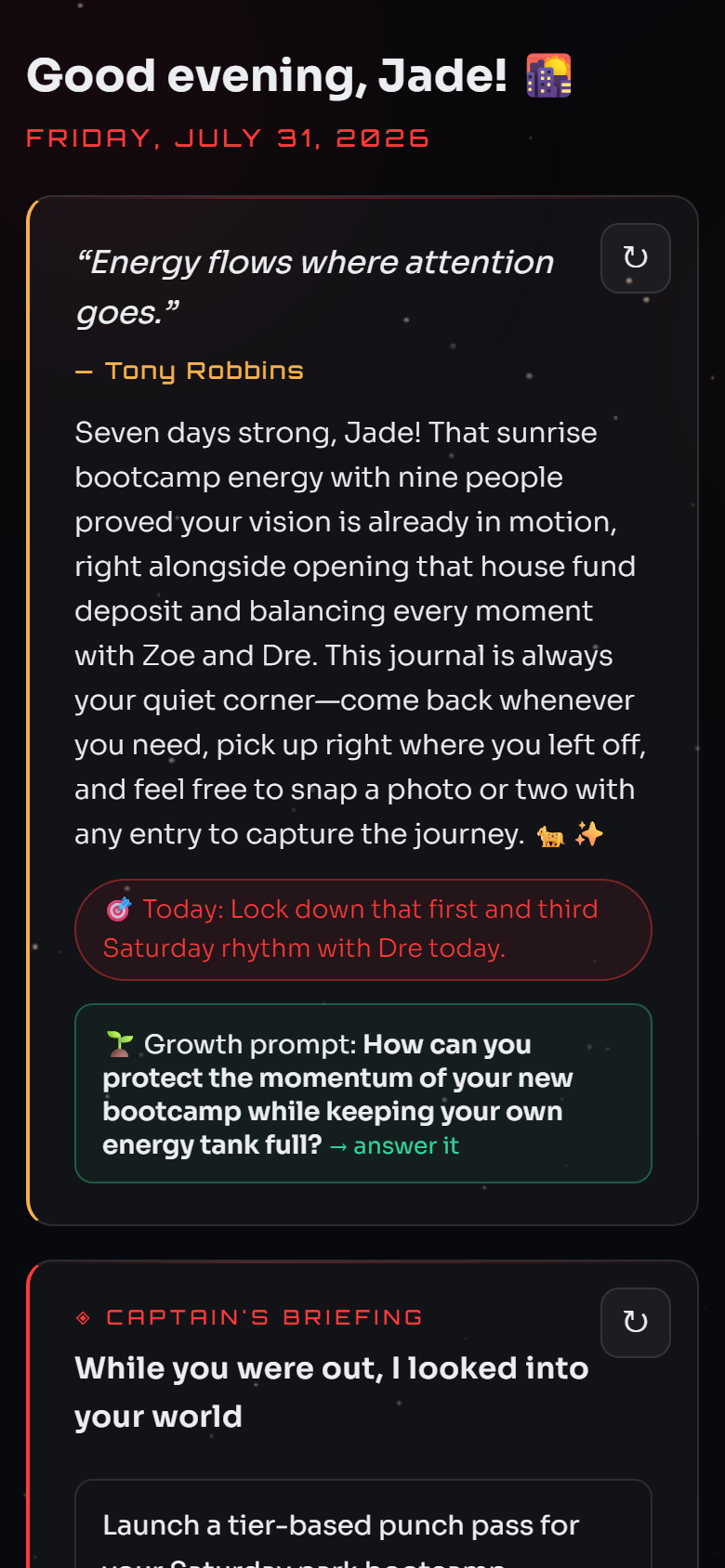
The private daily writing workspace in FIVEPILLAR MINDSET. Use the workbook actions in this guide to carry an exercise into your own private entry.
Concrete Signs Responsibility Has Curled Into Shame
When honest self-examination morphs into emotional punishment, your daily mindset shifts dramatically. Identifying these behavioral and mental shifts helps you interrupt the cycle before it derails your progress.
Focus Shifted from Action to Identity
You stop evaluating what went wrong in a specific instance and start believing that your character is flawed beyond repair.
Paralysis Over Actionable Repair
Instead of reaching out to make amends or adjust a routine, you isolate yourself, feeling too inadequate to take action.
Disproportionate Self-Punishment
The emotional penalty and harsh inner commentary you inflict upon yourself far exceed the actual scope or impact of the error.
Ruminative Guilt Without Resolution
You replay past mistakes continuously in your mind without moving toward constructive solutions or habit adjustments.
Real-World Scenarios and Practical Repair
Consider a common situation in habit building or recovery: missing an early workout or breaking a personal commitment. A responsibility-minded reaction notes the lapse objectively, identifies contributing factors like poor sleep or overcommitment, and adjusts the schedule for the next day. A shame-driven reaction concludes that you lack discipline, will always fail, and might as well abandon your goals entirely. To transition from shame back to constructive responsibility, you must separate your core worth from temporary actions. Repair begins with objective facts: state what occurred without dramatic language, acknowledge who or what was impacted, and establish a concrete, manageable next step. Documenting these moments neutrally creates a clean record of your journey, allowing you to learn from setbacks rather than suffer through them.
Try This in Your Journal
Use your private AI journal to deconstruct overwhelming emotional reactions into clear, actionable steps. Follow these steps to convert destructive shame into productive accountability.
1. Record the Objective Event
Use voice input or text in your private AI journal [F1] to describe exactly what happened using plain, unembellished facts. Members choose what they write or save, keeping reflections completely private [F2].
2. Separate Fact from Emotional Evaluation
Write down the negative thought you experienced. Label it clearly as an emotional interpretation rather than an absolute truth about your character.
3. Identify One Actionable Repair Step
Define one immediate, practical action you can take today to address the mistake or reinforce your daily habit commitment.
4. Engage Your Coach for Perspective
Prompt your coach chat to review your entry. The coach utilizes a bounded rolling summary capped at 600 words for lasting facts [F3], while generated drafts and research copy are excluded [F4].
Knowing When Self-Reflection Requires Human Support
Journaling and personal accountability tools are powerful instruments for self-awareness, but they are not substitutes for professional medical care or human support networks. Recognizing these boundaries is essential for safety.
Persistent Emotional Distress
If feelings of shame or guilt trigger deep anxiety, depression, or severe paralysis, professional human care is necessary.
Crisis and Recovery Resources
For coping strategies and assistance with mental health, substance use, or alcohol issues, consult SAMHSA resources [S1].
Complementary Tools, Not Medical Care
A private AI journal supports habit tracking, daily reflection, and growth [F1], but never provides medical diagnoses or clinical treatment.
Building Human Connection
Pair your written self-reflection with honest conversations alongside trusted mentors, counselors, or recovery peers.
True discipline is built on radical honesty, not self-destruction. Facing your mistakes cleanly gives you the strength to correct them; burying yourself in shame only steals your power to change.
Grounding Principle
Transform Accountability into Daily Growth
Start keeping a true, private record of your life. Utilize voice input, coach chat, monthly reviews, and habit tracking [F1] to build discipline grounded in clear self-awareness.
How do I know when responsibility has turned into shame?
Responsibility focuses on correcting an action ('I made a mistake and can fix it'), whereas shame attacks your character ('I am a failure'). When self-reflection makes you feel paralyzed rather than motivated to repair, responsibility has turned into shame.
Can journaling help break the cycle of self-blame?
Yes. Writing down events using voice input or text in a private AI journal [F1] allows you to separate raw facts from emotional overreactions. You can add a quick 'Make a note about this in your journal' prompt whenever you notice self-criticism taking over.
How does the AI coach assist without misinterpreting personal history?
The coach uses a bounded rolling summary capped at 600 words for key personal facts [F3], while full entries remain separate and public articles or generated drafts are excluded [F2, F4]. You can use the prompt 'Ask your coach: How can I focus on practical repair rather than self-blame?' for objective perspective.
Does journaling replace therapy or clinical recovery support?
No. Journaling is a self-reflection tool for habits and growth [F1]. If emotional distress or shame becomes overwhelming, seek support through trusted resources such as SAMHSA [S1] or qualified healthcare professionals.
FROM EDUCATION TO PERSONAL ACTION
Use this insight inside FIVEPILLAR MINDSET
This article remains public educational content. Inside the private journal, you decide whether to apply it to your own life, save a reflection or discuss it with your coach.
AI journal and contextual coachCapture the reflection in your own words and ask a coach that can use bounded, editable personal context.See how this feature works →
One Life Coach Operating SystemThe journal, memory, goals, timeline, map, favorites, coach and books are connected views—not separate journals.Explore the complete system →
Try it without an accountUse fictional sample data to feel the raw-words-to-coaching transformation. Nothing is saved and no paid AI call is made.Open the interactive demo →
Sources & verified facts
Product: A private AI journal with voice input, long-term condensed memory, coach chat, photos, places, habits, recovery-aware support, monthly reviews and a printable yearbook.
Private app behavior: Members choose what they write or save; public articles are not automatically copied into private journal entries.
Coach memory: The coach uses a bounded rolling summary capped at 600 words for lasting personal facts, while full private entries remain separate.
Memory exclusions: Generated drafts, blog copy, scripts, research text and the coach's prose are explicitly excluded from personal memory condensation.
This article is for educational and personal development purposes only and does not constitute medical, psychological, or clinical advice. If you are experiencing severe mental distress, please consult a qualified healthcare professional or crisis resource.