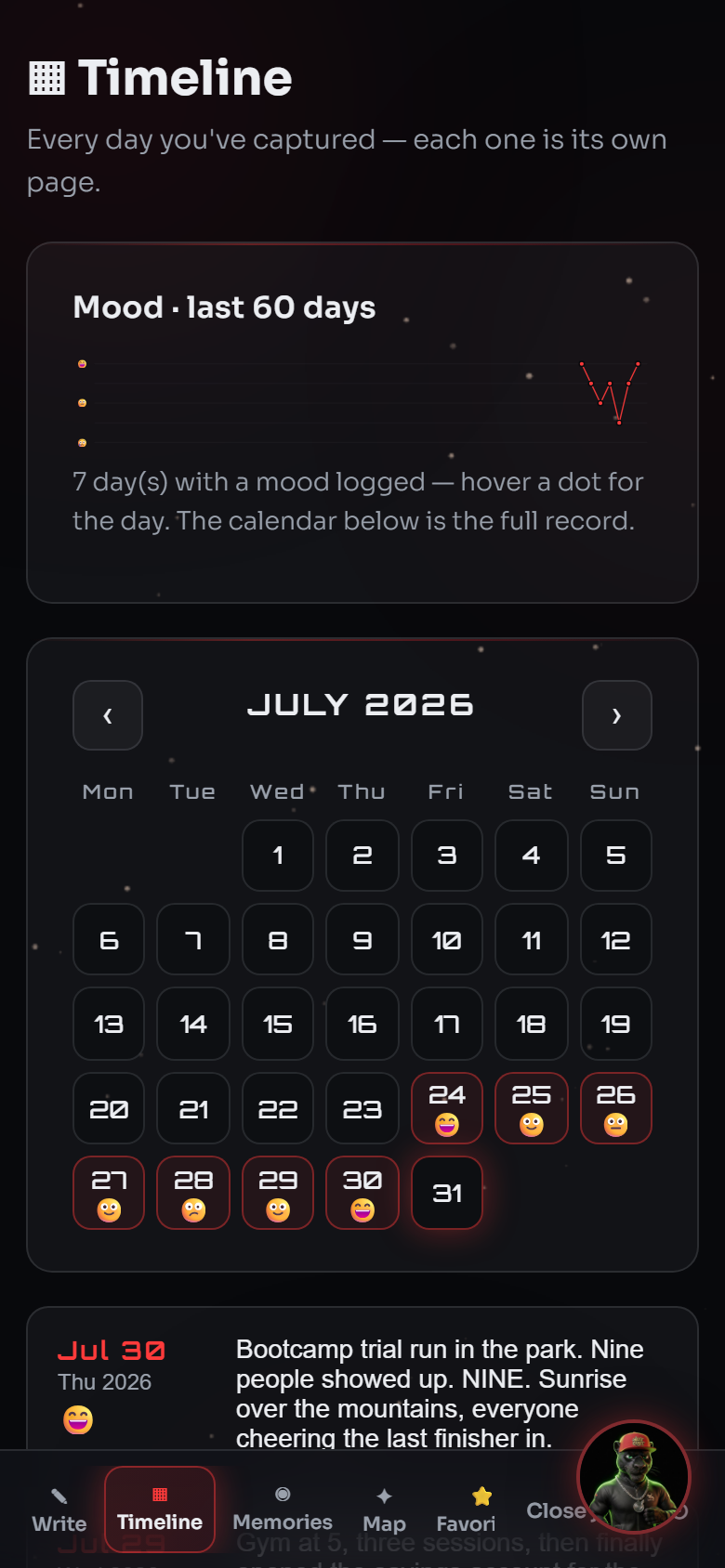
A FIVEPILLAR MINDSET visual created for this guide. The practical journal exercise appears below.
The Shift from Punishment to Sustainable Progress
For many pursuing high performance, a traditional training log is treated as a ledger of debts. Every missed set, slower mile, or skipped session is written down with an undertone of guilt. This punitive approach to tracking ignores the physiological reality of human performance: sustainable physical development requires a balance of stress and rest. When your journal is used primarily as an instrument of self-criticism, consistency inevitably suffers, leading to burnout, physical regression, or injury. Shifting your primary query from 'how much did I punish myself today' to 'how am I managing my training journal progress recovery consistency' is the foundation of long-term physical durability. An honest record is one that documents your actual physical state without judgment, prioritizing the daily discipline of showing up over arbitrary perfection.
The searchable personal journal timeline in FIVEPILLAR MINDSET. Use the workbook actions in this guide to carry an exercise into your own private entry.
The Essential Variables to Track
1. Daily Sleep Quality and Total Hours
Before you log a single lift or mile, document how you slept. Note the estimated hours and whether you woke up feeling refreshed or fatigued. Sleep is the primary driver of physical recovery, and tracking it helps you contextualize why a training session felt unusually easy or incredibly heavy.
2. Morning Energy and Muscle Soreness
Rate your baseline energy on a simple scale when you wake up, and make note of any localized soreness or joint stiffness. Identifying these trends early helps you make informed modifications to your training intensity before minor aches turn into chronic injuries.
3. Actual Training Performance and Effort Levels
Record what you accomplished in your session, but always pair it with a rating of perceived exertion. A 200-pound lift can feel like a breeze on a fully rested day, or like a maximal effort after a poor night's sleep. Your journal should reflect this qualitative difference.
4. Food Notes and Nutritional Utility
Rather than obsessively counting every calorie, focus on how your food choices fuel your physical activities. Write down brief notes on how your pre-workout meals affected your stamina, or which foods left you feeling bloated and lethargic during training.
5. Personal Records and Subtle Victories
Document your personal records, but expand your definition of a 'win.' Holding perfect form on a final set, completing your mobility work on a busy day, or choosing to rest when your body is broken down are all major victories for long-term consistency.
6. Questions for Qualified Professionals
Your journal should serve as your baseline biological history. When you notice persistent pain, unusual fatigue, or movement patterns that feel off, write down specific questions. This gives you an organized, data-driven list to review with a doctor, physical therapist, or certified coach.
Try This in Your Journal: A Framework for Self-Reflection
A great training log is easy to maintain and highly functional. To make this process seamless, the FIVEPILLAR MINDSET private AI journal provides a suite of tools designed to capture your journey in real time [F1]. Here is how you can practically apply this framework using your journal's native capabilities:
Voice Input for Post-Workout Reflections
Avoid the friction of typing with tired hands. Use the private voice input feature immediately after your cool-down to dictate your physical observations, training highlights, and current physical fatigue level [F1].
Searchable Favorites for Nutrition and Spots
Keep track of your environmental variables. Use the searchable library tools to favorite specific recovery meals, training places, or recipes that consistently support your physical preparation [F5].
Long-Term Condensed Memory for Trend Identification
As you log daily, the coach chat utilizes a bounded rolling summary capped at 600 words to recall lasting personal facts about your recovery habits, allowing you to discuss physical trends without cluttering your workspace [F3].
Monthly Reviews and Your Printable Yearbook
At the end of each month, review your training patterns to spot consistency bottlenecks. Over the course of the year, these entries compile into a permanent, printable physical yearbook documenting your discipline [F1].
Action Steps for Your Next Log Entry
To build an unbreakable tracking habit, keep your daily templates simple and highly actionable. Start today by applying this physical logging method to your routine.
Make a note about this in your journal: 'Today's training session was [write session details]. My morning energy was [1-10] and my sleep last night was [hours/quality]. I noticed specific tightness or soreness in my [list physical areas]. This session felt like a [1-10 exertion scale] because [brief explanation of external stressors or fuel].'
By keeping this log consistently, you establish an objective baseline of your physical habits. When you run into plateaus or struggle with recovery, you can bring these concrete observations to your qualified physical trainer or medical professional.
Ask your coach: 'Based on my recent training entries and my recovery habits, what patterns are we starting to see regarding my physical consistency and morning energy levels?' [F1]. Your private coach can help you process your thoughts based on a bounded 600-word summary of your high-level habits [F3], allowing you to see the bigger picture of your physical commitment.
Discipline isn't about running yourself into the ground every single day. It's about having the self-awareness to track your physical state, the humility to rest when recovery demands it, and the consistency to show up again tomorrow. A training journal is not a tool for punishment—it is the permanent record of your commitment to growth.
Grounded Discipline Over Fleeting Motivation
Build Your Permanent Physical Record
Your journey of self-discipline, recovery, and personal growth deserves a dedicated, secure space. With the FIVEPILLAR MINDSET private AI journal, you can securely capture your training sessions via voice input, analyze your habits with an AI coach that respects your privacy, and organize your favorite physical routines with searchable library tools [F1][F3][F5]. Your public writing and generated drafts are always kept completely separate from your private memory [F2][F4], giving you a safe, offline-capable environment to document your life.
How does the FIVEPILLAR MINDSET coach memory protect my private training logs?
To ensure absolute privacy, the AI coach does not read your full, detailed raw journal entries. Instead, it utilizes a bounded rolling summary capped at 600 words that captures lasting personal facts, daily habits, and high-level training goals [F3]. Additionally, any generated drafts, blog copy, scripts, and research text are explicitly excluded from this personal memory condensation [F4].
Can I keep track of my favorite pre-workout meals and training locations in the app?
Yes. The FIVEPILLAR MINDSET journal features searchable library tools specifically designed to track your favorite people, songs, dishes, recipes, places, books, activities, products, and personal memories [F5]. This makes it simple to categorize and locate the exact meals and environments that optimize your training and recovery.
Does my public blog copy or generated text save to my private journal memory?
No. Members retain complete control over what they write and save. Public articles are not automatically copied into your private journal entries [F2]. Furthermore, the coach's prose, research texts, and generated drafts are entirely excluded from your personal memory condensation [F4].
Can a recovery-focused journal replace professional fitness or medical advice?
No. A training journal is a highly effective tool for self-reflection, personal accountability, and tracking consistency [F1]. It is not a substitute for professional coaching, medical diagnostics, physical therapy, or prescriptive fitness plans. Always consult with qualified healthcare professionals or certified trainers regarding physical injuries or structured training regimens.
FROM EDUCATION TO PERSONAL ACTION
Use this insight inside FIVEPILLAR MINDSET
This article remains public educational content. Inside the private journal, you decide whether to apply it to your own life, save a reflection or discuss it with your coach.
Recovery-aware journalUse private daily inventory, milestone reflection and optional program-aware support alongside real-world care.See how this feature works →
One Life Coach Operating SystemThe journal, memory, goals, timeline, map, favorites, coach and books are connected views—not separate journals.Explore the complete system →
Try it without an accountUse fictional sample data to feel the raw-words-to-coaching transformation. Nothing is saved and no paid AI call is made.Open the interactive demo →
Sources & verified facts
Product: A private AI journal with voice input, long-term condensed memory, coach chat, photos, places, habits, recovery-aware support, monthly reviews and a printable yearbook.
Private app behavior: Members choose what they write or save; public articles are not automatically copied into private journal entries.
Coach memory: The coach uses a bounded rolling summary capped at 600 words for lasting personal facts, while full private entries remain separate.
Memory exclusions: Generated drafts, blog copy, scripts, research text and the coach's prose are explicitly excluded from personal memory condensation.
Library tools: The journal supports searchable favorites for people, songs, dishes, recipes, places, books, activities, products and memories.
The educational content provided in this article is for personal development, discipline tracking, and self-reflection purposes only. It does not constitute medical advice, physical therapy, or prescriptive athletic training. Always seek the guidance of a qualified health professional or certified personal trainer with any questions you may have regarding a physical injury, dietary changes, or starting a new training regimen.
Authoritative resource
For current public-health context on adult physical activity, consult the CDC guidance; use a personal training journal for observations, not individualized medical advice.