A FIVEPILLAR MINDSET visual created for this guide. The practical journal exercise appears below.
🧭 The Recovery Path · Stage 2 of 6 — One day at a time · See the whole path
The Trap of the All-or-Nothing Day Count
For many people navigating growth and recovery, a day counter is the default metric of success. While celebrating daily milestones can build initial momentum, relying exclusively on a consecutive streak creates a subtle danger: perfectionism. When your entire progress is tied to a fragile number, a single slip can feel like total reset, triggering intense shame and a complete breakdown of discipline. Recovery is formally defined as a process of change through which individuals improve their health and wellness, live a self-directed life, and strive to reach their full potential [S1]. It is an ongoing trajectory of personal growth, not an all-or-nothing game where one mistake erases months of character building.
When perfectionism takes over, people often protect the day count at all costs—sometimes hiding struggles, suppressing honest feelings, or avoiding accountability calls simply to keep the counter moving. This undermines the core foundation of self-trust. To build lasting discipline, tracking must shift from guarding an arbitrary number to documenting meaningful, multi-dimensional lifestyle shifts.
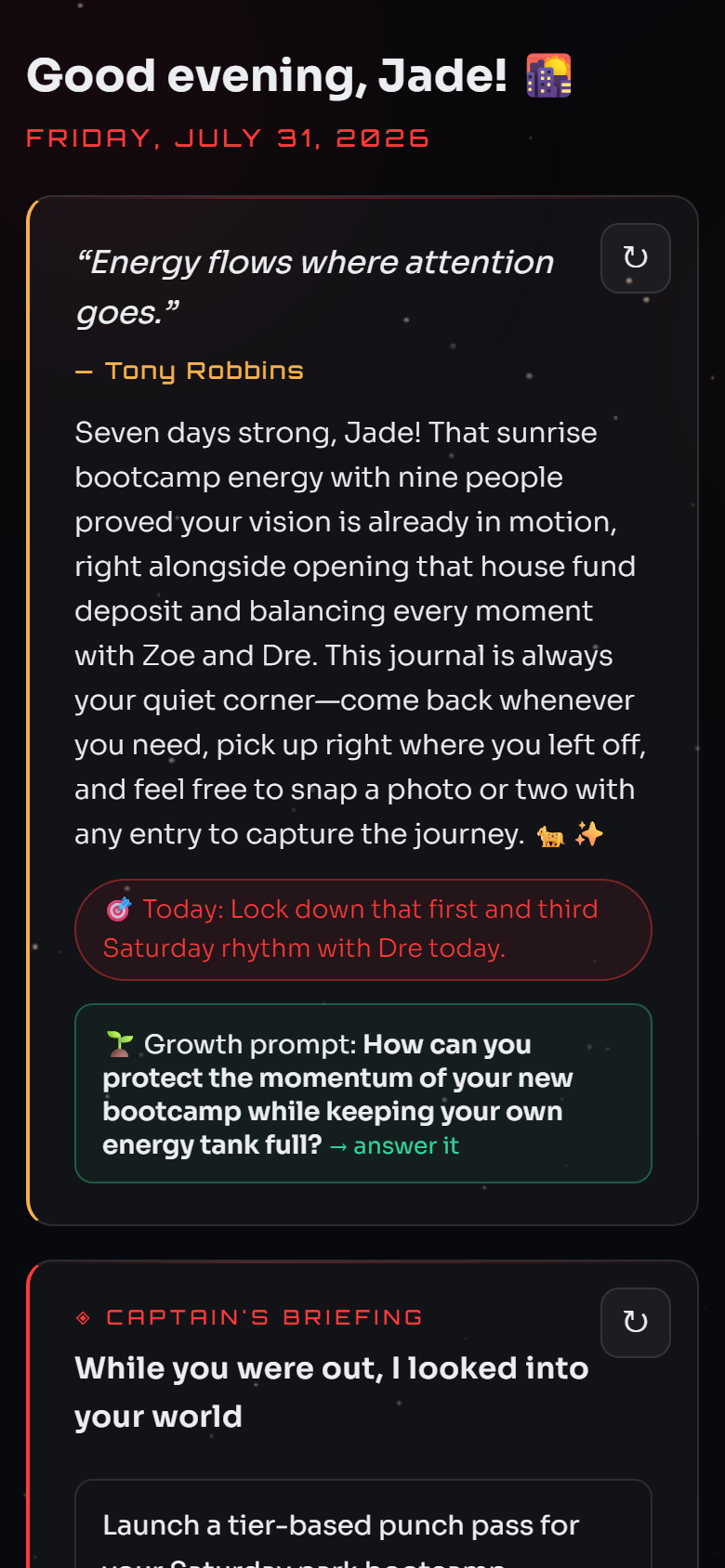
The private daily writing workspace in FIVEPILLAR MINDSET. Use the workbook actions in this guide to carry an exercise into your own private entry.
The Four Pillars of Holistically Measuring Progress
Instead of measuring recovery solely by time elapsed, public health research highlights four critical dimensions that support a life in recovery: health, home, purpose, and community [S2]. Tracking your milestones across these pillars provides an accurate picture of real resilience.
1. Health
Documenting physical, emotional, and mental well-being [S2]. This includes logging consistent sleep, nutrition, physical recovery, and manageing stress levels through regular self-reflection.
2. Home
Establishing a stable, safe, and supportive living environment [S2]. Milestones here look like maintaining clean spaces, setting peaceful routines, and keeping your personal sanctuary secure.
3. Purpose
Engaging in meaningful daily activities, such as work, creative pursuits, education, or community service, while building independence and resources to participate in society [S2].
4. Community
Building relationships and social networks that provide support, friendship, love, and hope [S2]. Milestones include making honest outreach calls, setting firm boundaries, and attending support meetings.
Practical Metrics Beyond the Calendar
To build a robust record of your life that withstands difficult days, focus on practical actions that strengthen your foundation. Keep track of these concrete metrics during your weekly review.
Log Honest Outreach Calls
Record every time you reach out to a trusted peer, mentor, or friend when feeling overwhelmed. Immediate human connection provides active coping support during high-stress moments [S3].
Document Boundaries Established
Track the moments you say 'no' to environments, habits, or individuals that threaten your peace. Boundary setting is a major indicator of self-respect.
Record Support Meeting Engagement
Note not just that you attended a meeting or community gathering, but what you shared or learned while there.
Track Home and Body Restoration
Keep note of routine health decisions, physical movement, and home improvements that make your environment more grounding [S2].
What to Write After a Setback: Prioritizing Human Connection Over Streaks
If a setback occurs, perfectionism will urge you to isolate or pretend it didn't happen to preserve a narrative. However, protecting a streak on paper is meaningless if you lose grounded reality. Immediate human support and reaching out to trusted allies matter far more than keeping an unbroken day count [S3].
When writing in your journal after a setback, avoid emotional self-flagellation. Treat your journal as a truthful ledger. Record the facts: What were the triggers? Where was the boundary breakdown? What emotions preceded the event? Writing down the honest reality allows you to spot patterns without slipping into shame.
Make a note about this in your journal: Write down two people you can call immediately when you feel urge or overwhelm, and record the exact trigger that compromised your boundaries today.
Ask your coach: 'How can I look at my recent setback objectively to extract lessons without letting shame ruin my momentum?' [F1]
Try this in your journal
Use these structured steps within your private journal to build a sustainable milestone reflection system that emphasizes holistic growth over perfectionism [F1].
Step 1: Record Raw Reflection via Voice Input
Speak honestly after a tough day or meeting using voice input to clear your mind without worrying about perfect syntax [F1].
Step 2: Catalog Safe Boundaries and Places
Use searchable favorites to save safe places, supportive people, grounding books, and healthy daily activities that reinforce your recovery routine [F5].
Step 3: Track Habit Consistency across the Four Pillars
Log custom habits tied to health, home, purpose, and community [S2], recording small daily actions rather than just counting consecutive sober days [F1].
Step 4: Engage Coach Chat for Recovery-Aware Perspective
Prompt the coach chat to help synthesize weekly reflections, maintaining objective clarity without punitive judgement [F1].
Discipline is not about maintaining a fragile illusion of flawlessness. It is about building an unshakeable system of honesty, daily accountability, and rapid self-correction.
A Grounded Standard
System Safeguards for Private Reflection
FivePillar Mindset is designed with specific architectural safeguards to keep your personal records secure, clear, and relevant [F1].
Explicit Memory Exclusion
Generated drafts, blog copy, research text, and coach responses are explicitly excluded from your personal memory condensation, keeping your core facts accurate [F4].
Bounded Rolling Summaries
The coach utilizes a bounded rolling summary capped at 600 words for personal context, ensuring focused, relevant guidance without clutter [F3].
User-Controlled Entry Isolation
Members maintain complete control over what is written or saved; public reference articles are never automatically copied into personal entries [F2].
Document Your True Life Journey
Build a permanent, honest record of your discipline, growth, and milestones with recovery-aware voice tracking, habit logging, monthly reviews, and a printable yearbook [F1].
Why is counting days alone sometimes counterproductive in recovery?
Counting days alone can promote perfectionism, making a single slip feel like total failure. Measuring progress across health, home, purpose, and community offers a realistic picture of overall life restoration [S2].
What should I do immediately after a recovery setback?
Prioritize immediate human connection and support over keeping a continuous streak [S3]. Log the facts objectively in your private journal [F1] to understand triggers without engaging in destructive self-criticism.
How does FivePillar Mindset keep my recovery entries private and distinct?
Members control what is saved [F2]. Coach context relies on a bounded 600-word summary [F3], and external items like generated drafts or public articles are strictly excluded from personal memory [F4].
Can journaling replace professional help or support groups?
No. Journaling is a tool for self-reflection, habit tracking, and clarity [F1]. It complements, but never replaces, human support networks, professional guidance, or emergency care [S3].
FROM EDUCATION TO PERSONAL ACTION
Use this insight inside FIVEPILLAR MINDSET
This article remains public educational content. Inside the private journal, you decide whether to apply it to your own life, save a reflection or discuss it with your coach.
Recovery-aware journalUse private daily inventory, milestone reflection and optional program-aware support alongside real-world care.See how this feature works →
One Life Coach Operating SystemThe journal, memory, goals, timeline, map, favorites, coach and books are connected views—not separate journals.Explore the complete system →
Try it without an accountUse fictional sample data to feel the raw-words-to-coaching transformation. Nothing is saved and no paid AI call is made.Open the interactive demo →
Sources & verified facts
Product: A private AI journal with voice input, long-term condensed memory, coach chat, photos, places, habits, recovery-aware support, monthly reviews and a printable yearbook.
Private app behavior: Members choose what they write or save; public articles are not automatically copied into private journal entries.
Coach memory: The coach uses a bounded rolling summary capped at 600 words for lasting personal facts, while full private entries remain separate.
Memory exclusions: Generated drafts, blog copy, scripts, research text and the coach's prose are explicitly excluded from personal memory condensation.
Library tools: The journal supports searchable favorites for people, songs, dishes, recipes, places, books, activities, products and memories.
This page is provided for educational and self-improvement purposes only. It is not medical or clinical advice, nor a substitute for addiction therapy, professional mental healthcare, or emergency medical support.