A FIVEPILLAR MINDSET visual created for this guide. The practical journal exercise appears below.
🧭 The Recovery Path · Stage 1 of 6 — Starting or returning · See the whole path
Understanding Self-Management and Change-Oriented Journaling
Personal growth and recovery rely heavily on self-management—the intentional process of observing one's thoughts, identifying triggers, and executing deliberate actions to replace unhelpful habits [S1][S2]. Journaling serves as one of the most effective tools for self-management because it transforms internal conflict into objective, reviewable language. By writing down urges, analyzing choices, and tracking daily decisions, individuals gain clarity over their emotional patterns and increase their self-efficacy [S2].
While FIVEPILLAR MINDSET is an independent platform and is not affiliated with, endorsed by, or connected to SMART Recovery [S1], its journaling tools are designed to support self-directed, cognitive-behavioral principles. SMART Recovery emphasizes a four-point program focused on building motivation, coping with urges, managing thoughts and behaviors, and living a balanced life [S1]. Structured journaling directly reinforces each of these pillars by turning abstract intentions into concrete daily practices [S1][S2].
When you maintain a dedicated change-plan journal, you create an honest ledger of where you stand and where you are headed. Rather than relying on memory alone—which can be distorted during moments of high stress or emotional vulnerability—a daily reflection practice records exact triggers, physical sensations, and outcomes [S1]. Over weeks and months, this record becomes proof of growth and an essential map for navigaing future obstacles [S2].
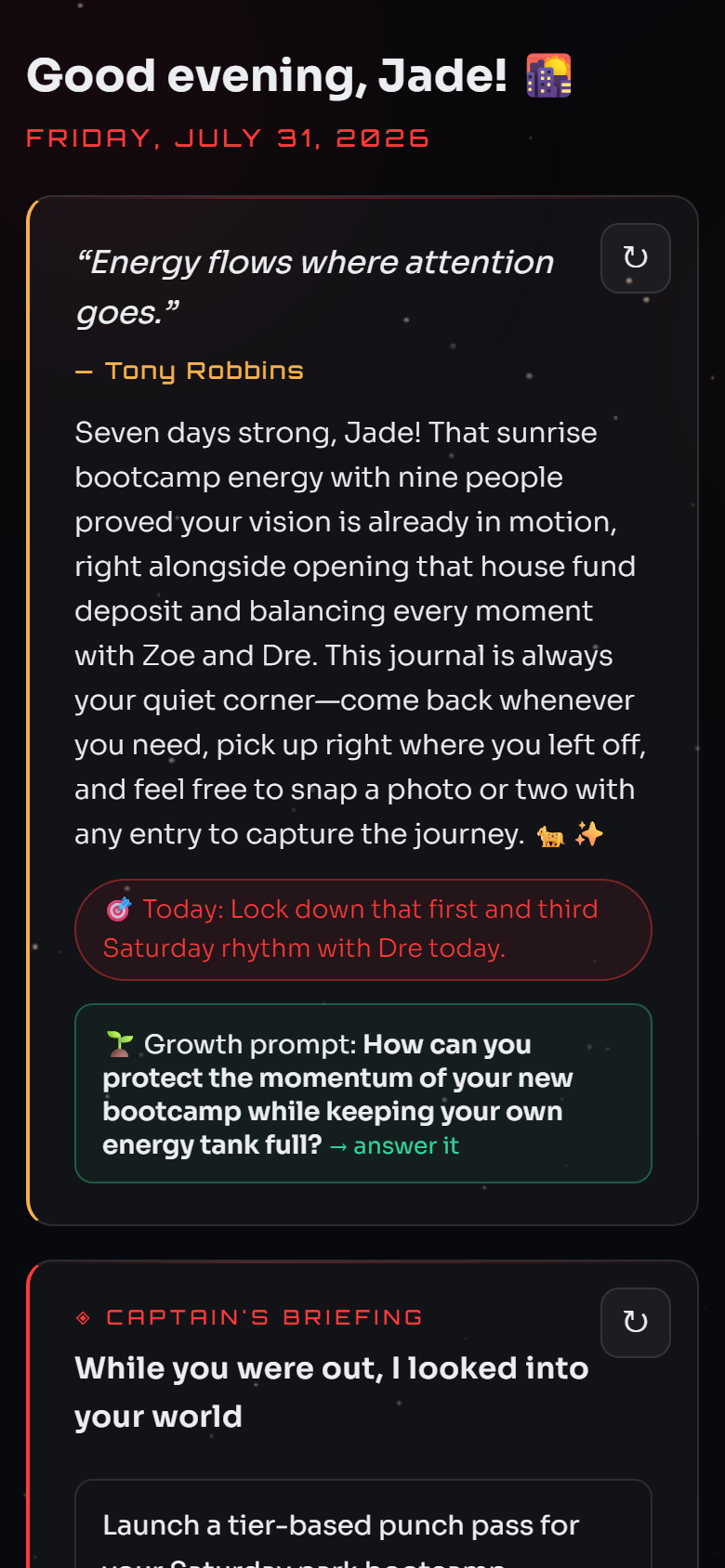
The private daily writing workspace in FIVEPILLAR MINDSET. Use the workbook actions in this guide to carry an exercise into your own private entry.
Four Core Journaling Frameworks for Habit and Recovery Growth
The Change Plan
A structured baseline entry outlining explicit reasons for change, key triggers to avoid, personal boundaries, and concrete action steps for high-risk situations [S1].
The Urge Log
A real-time or end-of-day entry detailing the trigger, location, intensity of the urge (1–10), physical feelings, and the specific coping strategy used [S1][S2].
Cost-Benefit Reflection
A side-by-side analysis weighing short-term impulses against long-term goals across health, mindset, finances, relationships, and purpose [S1].
Weekly Coping Review
A weekly audit reviewing past urge logs to identify emerging patterns, rate coping effectiveness, and refine lifestyle strategies for the upcoming week [S1].
Try this in your journal
Step 1: Record Your Initial Change Plan
Open FIVEPILLAR MINDSET and use voice input or text to state your primary objective, core values, and specific boundaries [F1]. Describe what life looks like when you uphold these standards versus what happens if you break them. Members choose what they write or save, keeping private journal entries entirely under their own control [F2].
Step 2: Log Urges with Context and Location
When an urge or high-stress moment occurs, capture it immediately using voice capture [F1]. Note the time, setting, physical sensations, and intensity scale. Save specific locations, activities, or routines in your searchable favorites library to track recurring environmental triggers over time [F5].
Step 3: Conduct a Cost-Benefit Reflection
When facing a difficult decision or persistent craving, record a dedicated reflection entry. Split your thought process into immediate rewards versus long-term consequences [S1]. Speak your thoughts freely using voice input to work through emotional tension in real time [F1].
Step 4: Engage Coach Chat for Reflection Analysis
Prompt the built-in AI coach to help review your weekly log entries for repeating emotional patterns or stress triggers [F1]. The coach utilizes a bounded rolling summary capped at 600 words for lasting personal facts, ensuring your personal context is remembered while full private entries remain separate [F3].
Structuring Urge Logs and Cost-Benefit Reflections for Daily Grounding
An urge log is most powerful when executed with objectivity rather than judgment. When individuals experience cravings or impulsive drives, shame often leads to avoidance. By treating an urge as data rather than a moral failure, you shift from emotional reactivity to calm, rational analysis [S1]. Logging the precise time, emotional state, location, and thought process allows you to spot external cues—such as tiredness, isolation, specific social settings, or time of day—that precede cravings [S1][S2].
Similarly, a cost-benefit reflection helps disrupt automatic decision-making. Brain science and cognitive theory show that impulsivity favors immediate, short-term relief while minimizing long-term costs [S1]. Writing down the immediate short-term pros alongside the long-term cons forces both sides of the brain to participate in the decision. In FIVEPILLAR MINDSET, users can complete these reflections by speaking into the app, allowing raw thoughts to be captured without the friction of manual typing [F1].
To keep your personal memory clean and focused, FIVEPILLAR MINDSET separates personal reflection from secondary app data [F3]. Generated drafts, blog copy, research text, and coach prose are explicitly excluded from personal memory condensation [F4]. This ensures that your interactive coach memory focuses strictly on your true personal facts and evolving self-management goals [F3][F4].
Make a note about this in your journal: Record your top three recurring triggers from this past week, rate their average intensity on a scale of 1 to 10, and write down one specific coping delay technique you will deploy next time.
Ask your coach: 'Based on my recent urge logs, what patterns do you see in my stress responses, and how can I reinforce my daily coping strategies?'
Discipline isn't about perfection; it's about honest reflection, taking ownership of your choices every single day, and building an indisputable record of resilience you can look back on with pride.
Grounded Philosophy for Sustainable Growth
Recovery-Aware Tools Inside FIVEPILLAR MINDSET
Voice Input for Frictionless Capture
Speak directly into the app during moments of stress or late-night reflections, bypassing manual typing to record thoughts in real time [F1].
Searchable Context Libraries
Tag and search favorite places, activities, books, songs, and memories to analyze which environments support your growth and which trigger stress [F5].
Bounded Coach Memory
The coach retains key personal facts using a 600-word rolling summary, keeping interactions personalized without exposing or storing raw full entries in short-term chat models [F3].
Printable Yearbook & Monthly Reviews
Synthesize 30-day reflection cycles into monthly reviews and export a hardcopy printable yearbook to preserve a permanent, physical record of your life journey [F1].
Weekly Progress Check & Monthly Review Workflow
1. Conduct a Sunday Coping Audit
At the end of each week, review all urge logs, mood notes, and habit check-ins recorded over the previous seven days [F1]. Identify which coping mechanisms succeeded and which situations required higher exertion [S1].
2. Update Your Lifestyle and Habit Trackers
Adjust daily habit targets across nutrition, physical conditioning, sleep hygiene, and mental focus within your five-pillar routine based on your weekly audit [F1].
3. Review Monthly Condensed Insights
At the end of the month, generate your automated monthly review to evaluate long-term trends in emotional regulation, trigger reduction, and self-discipline [F1].
4. Generate Your Printable Life Record
Export your monthly reviews and milestone entries into a printable yearbook format, creating an indisputable physical archive of your continuous personal transformation [F1].
Scope and Limitations: Journaling as a Complementary Self-Management Tool
While structured journaling, habit tracking, and cognitive reflection offer immense value for self-discipline and personal awareness [S1][S2], it is crucial to recognize their practical boundaries. Self-directed digital journaling is a wellness and educational support system—it is not medical treatment, psychotherapy, or clinical addiction care [S1][S2].
Tools like FIVEPILLAR MINDSET provide structure, voice recording, habit tracking, and recovery-aware coach chat to help disciplined adults track personal goals and maintain self-accountability [F1]. However, software cannot replace professional medical advice, licensed mental health counseling, specialized addiction treatment, or human mutual-support communities [S1][S2]. Individuals dealing with severe substance use disorders, clinical depression, or crisis situations should pair self-management tools with certified professional care and dedicated support networks [S1][S2].
Build Your Private Change Plan Journal Today
Take control of your personal growth with private voice input, habit tracking, bounded coach memory, and printable yearly archives.
Is FIVEPILLAR MINDSET officially affiliated with SMART Recovery?
No. FIVEPILLAR MINDSET is an independent journaling and wellness education platform. While our journal supports self-management frameworks, cost-benefit reflections, and urge logging compatible with cognitive-behavioral principles [S1], we claim no official endorsement, partnership, or affiliation with SMART Recovery [S1].
How does voice input help with urge logging during high stress?
During intense cravings or emotional stress, writing or typing complex thoughts can feel overwhelming. Voice input allows you to speak freely in real time, capturing raw physical sensations, environmental cues, and triggers without technical friction [F1].
How is my personal journal data managed in FIVEPILLAR MINDSET?
Members explicitly choose what to write or save [F2]. Personal facts used by the AI coach rely on a bounded rolling summary capped at 600 words [F3], while external research copy, blog text, and coach prose are strictly excluded from personal memory condensation [F4].
Can journaling replace professional addiction treatment or support groups?
No. Journaling is a complementary self-management tool designed to build self-awareness, discipline, and habit tracking [S1][S2]. It does not provide medical treatment, diagnosis, or clinical therapy. Individuals in recovery are encouraged to utilize appropriate professional and community resources [S1][S2].
FROM EDUCATION TO PERSONAL ACTION
Use this insight inside FIVEPILLAR MINDSET
This article remains public educational content. Inside the private journal, you decide whether to apply it to your own life, save a reflection or discuss it with your coach.
Recovery-aware journalUse private daily inventory, milestone reflection and optional program-aware support alongside real-world care.See how this feature works →
One Life Coach Operating SystemThe journal, memory, goals, timeline, map, favorites, coach and books are connected views—not separate journals.Explore the complete system →
Try it without an accountUse fictional sample data to feel the raw-words-to-coaching transformation. Nothing is saved and no paid AI call is made.Open the interactive demo →
Sources & verified facts
Product: A private AI journal with voice input, long-term condensed memory, coach chat, photos, places, habits, recovery-aware support, monthly reviews and a printable yearbook.
Private app behavior: Members choose what they write or save; public articles are not automatically copied into private journal entries.
Coach memory: The coach uses a bounded rolling summary capped at 600 words for lasting personal facts, while full private entries remain separate.
Memory exclusions: Generated drafts, blog copy, scripts, research text and the coach's prose are explicitly excluded from personal memory condensation.
Library tools: The journal supports searchable favorites for people, songs, dishes, recipes, places, books, activities, products and memories.
This article is for educational and self-development purposes only and does not constitute medical advice, clinical diagnosis, or treatment. FIVEPILLAR MINDSET is an independent product and is not affiliated with, authorized by, or endorsed by SMART Recovery.