Radical Self-Honesty
Documenting raw emotions, temptations, and daily decisions without filter helps eliminate self-deception and strengthens accountability.
A private, disciplined practice to reflect on daily choices, track behavioral triggers, celebrate progress, and strengthen your overall foundation.

Recovery is a personal process of change through which individuals improve their health and wellness, live a self-directed life, and strive to reach their full potential [S1]. According to health frameworks, recovery encompasses four major dimensions: health, home, purpose, and community [S2]. Managing these dimensions requires systematic self-awareness and absolute honesty about daily behaviors, stress levels, and emotional states. Journaling creates an unvarnished space where you can inspect your thoughts without defense or pretense. In clinical research, structured journaling techniques have been evaluated for their supportive role in managing mental health and psychological stress [S4]. By externalizing internal friction onto the page, you gain clarity on what drives your decisions. However, private journaling is a complementary tool; it operates alongside established support systems like professional treatment, recovery meetings, sponsors, and peer networks rather than taking their place [S1, S3].
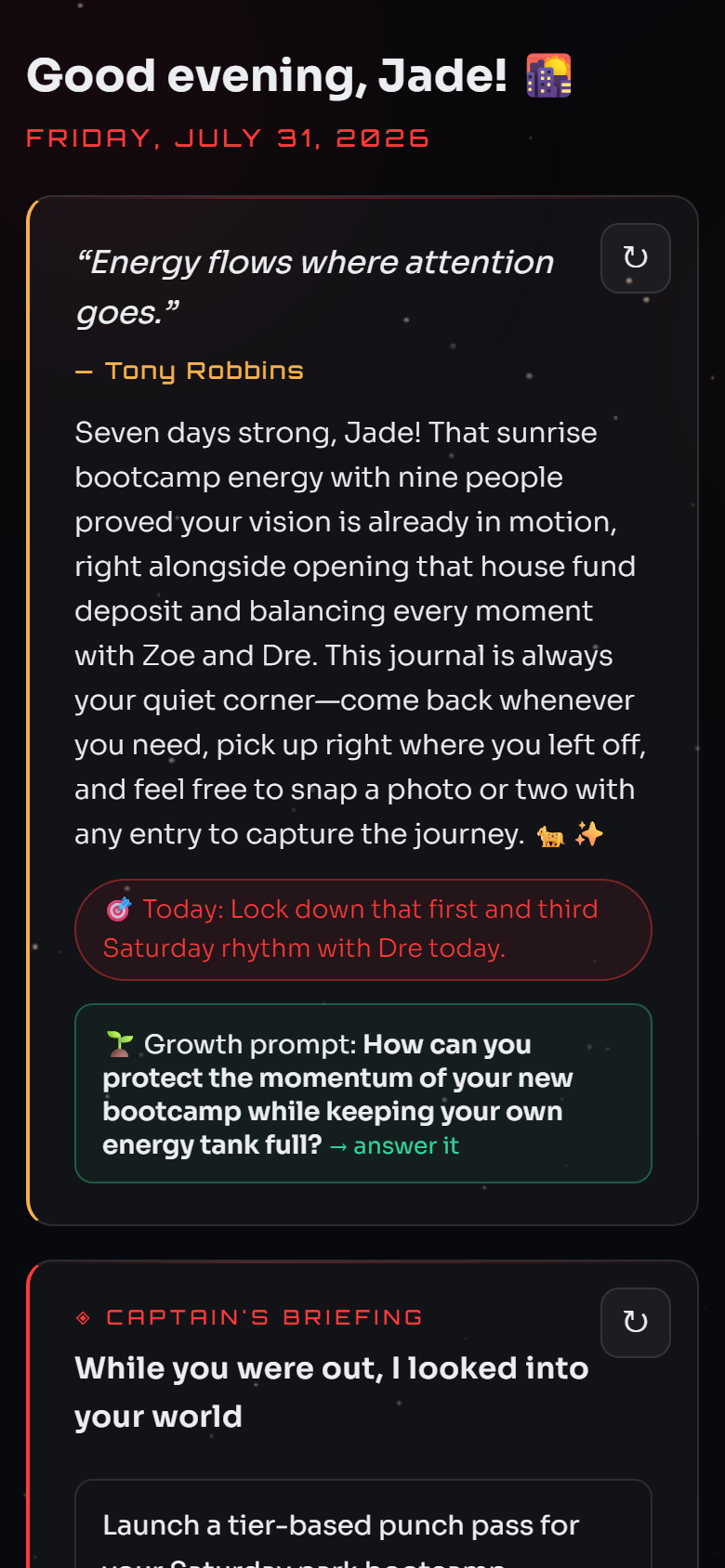
A structured journaling habit allows you to ground your personal philosophy in consistent action across daily routines.
Follow this practical daily routine using the FIVEPILLAR MINDSET platform to maintain momentum, process friction, and capture long-term growth.
Managing triggers requires active preparation rather than passive resistance. Research highlights that developing structured coping mechanisms and healthy problem-solving habits is essential when navigating emotional stress or environmental temptations [S3]. Journaling allows you to dissect past moments of friction so you can construct proactive responses for future challenges. When you identify recurring situations that elevate your stress or trigger urges, you can pre-script your actions. Instead of relying on willpower alone, you rely on a documented plan developed during moments of calm reflection. Make a note about this in your journal: Write down the exact time, physical location, and emotional state you were in during your last major moment of stress, along with three alternative responses you can take next time. Ask your coach: 'Based on my recent journal entries, what recurring environmental or stress triggers precede my highest friction levels, and what discipline routines can I use to counter them?'
Discipline is not about flawless perfection; it is about absolute honesty with yourself today so you can build a stronger foundation tomorrow.
Start documenting your journey with FIVEPILLAR MINDSET—a secure, private AI journal designed for voice reflection, trigger tracking, and habit discipline.
Explore FIVEPILLAR MINDSETNo. Journaling is a self-reflection tool that supplements professional medical care, therapy, support groups, and sponsorship. It provides a private venue for personal clarity but does not replace professional clinical guidance or peer support networks [S1, S3].
FIVEPILLAR MINDSET utilizes long-term condensed memory to store themes, habit consistency, and location context across entries. This helps you identify recurring triggers and emotional patterns that might otherwise go unnoticed.
Yes. Privacy is critical when working through personal reflection and recovery habits. FIVEPILLAR MINDSET provides a private, secure space designed solely for your individual growth, personal review, and printable yearbooks.
Start by describing your immediate physical environment, your current emotional state, and any physical sensations. Using voice input to speak freely for two minutes is often the easiest way to break through writer's block during high-stress moments.
FROM EDUCATION TO PERSONAL ACTION
This article remains public educational content. Inside the private journal, you decide whether to apply it to your own life, save a reflection or discuss it with your coach.