Condensed Personal Facts
The bounded 600-word summary captures core, long-term personal context like identity markers, active goals, and recovery milestones to keep coach conversations relevant [F1, F3].
Understand how your full private journal history remains distinct from the AI coach's 600-word memory summary while maintaining complete control over your personal record.

Understanding how modern digital journals process your personal reflections requires a clear technical distinction between your complete written history and the operational memory used by intelligent assistant tools. In FivePillar Mindset, your full private journal history acts as a permanent, unedited repository containing all voice entries, attached photos, location logs, and daily reflection text [F1]. This archive belongs entirely to you and remains separate from the active contextual processing engine. Conversely, the AI coach utilizes a bounded rolling summary capped at exactly 600 words to hold lasting personal facts [F3]. Rather than feeding your entire historical journal into every conversational exchange, the memory condenser continuously distills essential, enduring details—such as core habit goals, family names, or long-term commitments—into a compact overview [F1, F3]. Members choose what they write or save, ensuring public educational guides or draft notes do not distort their personal memory context [F2]. This architectural separation ensures responsive guidance without exposing your total written history to continuous contextual scanning [F3].
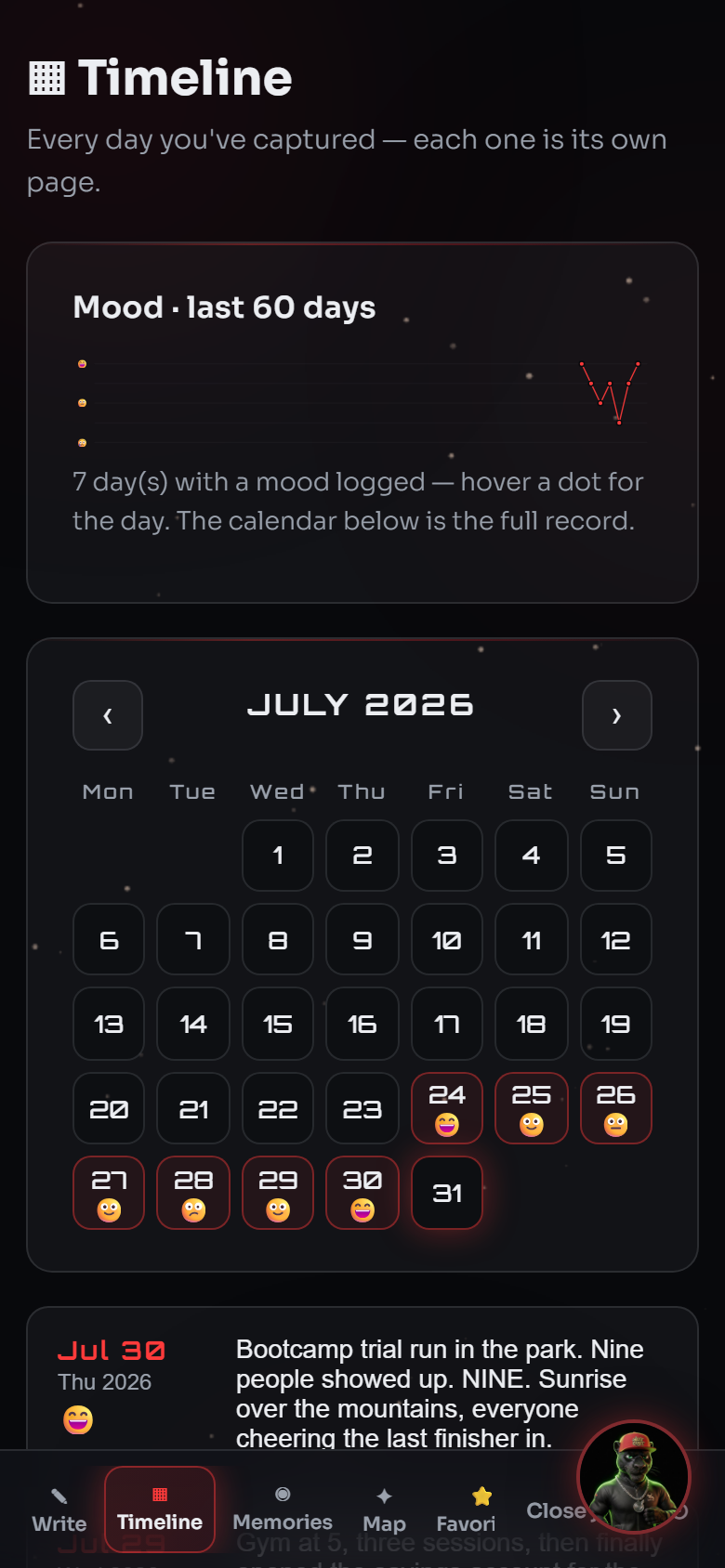
To maintain absolute transparency and prevent memory drift, FivePillar Mindset enforces strict rules governing what gets condensed, what remains searchable, and what is completely excluded from AI processing [F3, F4].
Take direct control of your private archive and test your AI memory boundaries using these actionable steps within the FivePillar Mindset app [F1].
Data privacy requires honest evaluation rather than inflated, absolute security promises. While FivePillar Mindset implements modern administrative safeguards to protect user data, no digital software platform can guarantee absolute immunity from security vulnerabilities or unauthorized access. Grounded privacy centers on user control and clear functional boundaries. Within the app, members choose precisely what they write or save into their personal account [F2]. Generated drafts, research text, and external prose are systematically filtered out to prevent cluttering or compromising your 600-word rolling context [F4]. Furthermore, while voice reflection, daily habit tracking, and structured journaling provide valuable educational tools for personal growth and emotional clarity [F1], journaling is an individual self-mastery discipline rather than a substitute for clinical therapy, medical treatment, or licensed psychiatric care.
Shaun 'Gotti' Williams developed the FivePillar philosophy around direct accountability, self-mastery, and unvarnished truth [F1].
Creating a personal record that lasts decades requires pairing modern software convenience with established archival methodologies. The U.S. National Archives emphasizes that long-term preservation of personal and family records relies on consistent organization, physical durability, and avoiding single points of storage failure [S1]. FivePillar Mindset implements these principles by offering structured monthly reviews, visual habit tracking, place logging, and an annual printable yearbook alongside daily digital entries [F1]. By insulating your full private journal history from the ephemeral nature of AI model updates—and relying on the bounded 600-word condenser purely for conversational assistance—you ensure that your voice reflections, milestone photos, and habit histories remain preserved as an authentic record of your life journey [F1, F3, S1].
Experience a private AI journal built on discipline, grounded privacy, and long-term reflection. Start building your printable life yearbook today with FivePillar Mindset [F1].
Get Started with FivePillar MindsetYour full private journal history contains every voice entry, photo, habit log, and written reflection you record [F1]. The AI memory condenser is a separate, bounded rolling summary capped at 600 words that retains core personal facts specifically for coach chat context [F3].
No. Generated drafts, blog copy, scripts, external research text, and coach prose are explicitly excluded from personal memory condensation to keep your AI summary clean and accurate [F4].
No. Public articles and brand guides are kept separate; members choose what they write or save, and public content is never automatically copied into private journal entries [F2].
You can use the built-in library tools to maintain searchable favorites for people, songs, dishes, recipes, places, books, activities, products, and memories independently of AI context [F5].
FROM EDUCATION TO PERSONAL ACTION
This article remains public educational content. Inside the private journal, you decide whether to apply it to your own life, save a reflection or discuss it with your coach.