Unfiltered Voice & Emotional Nuance
Audio captures tone, exhaustion, determination, and relief in ways written text or compressed videos cannot. Private voice input allows you to speak honestly without editing for an audience.
Social feeds host public highlights, but a private archive safeguards the unedited story, daily habits, and deeper context of your personal growth.

Over the past decade, social media platforms have become the default repository for personal memories. Millions of people record their milestones, family photos, trip details, and thoughts on networks controlled by third-party corporations. However, relying exclusively on social feeds to preserve your life beyond social media presents fundamental vulnerabilities. Account policies change, features are deprecated, algorithms determine visibility, and access can be unexpectedly lost due to automated flagging or account compromised events. Major platforms do offer official mechanisms to download your stored information. For instance, you can export a copy of your Facebook information through their official account settings [S1], and Google provides downloadable archives of your account data via Google Takeout [S2]. While these data exports are vital tools for backup, they deliver raw data dumps—folders filled with disjointed HTML files, unindexed images, and unformatted metadata. They are designed for data portability rather than meaningful reflection or personal continuity. More importantly, social media posts represent a curated subset of your life. Public platforms incentivize polished highlights, quick updates, and content tailored for external validation. They rarely capture the quiet discipline of daily habit building, the voice notes recorded during difficult life transitions, the specific family recipes passed down in private, or the internal recovery work that defines true personal transformation. A private archive acts as a dedicated repository for your whole life, preserving the complete truth of who you were, what you built, and how you grew.
A genuine record of your life requires depth, context, and security that public networks were never built to support.
When you look back at a social post from five years ago, you see what you chose to show the world. When you look back at a private journal entry, you see what you were actually experiencing. Self-mastery and personal growth require radical honesty. Shaun 'Gotti' Williams' five-pillar philosophy rests on the understanding that real transformation happens when you confront your habits, discipline, mindset, recovery, and spirit in an environment free from judgment or social performing. In a private archive, context is preserved automatically. A single photo of a trail run is linked to the habit you maintained that week, the voice entry recorded when you felt like quitting, and the location where you completed the distance. This multi-layered context enables deep self-awareness. When facing new obstacles, you can review exact past cycles of adversity and triumph, reminding yourself of proven resilience. Make a note about this in your journal: Write down three pivotal experiences from the past five years that you chose never to post on social media, and reflect on how those unposted moments shaped your character today.
Transitioning from fragmented social posts to a centralized personal record requires a clear, repeatable process.
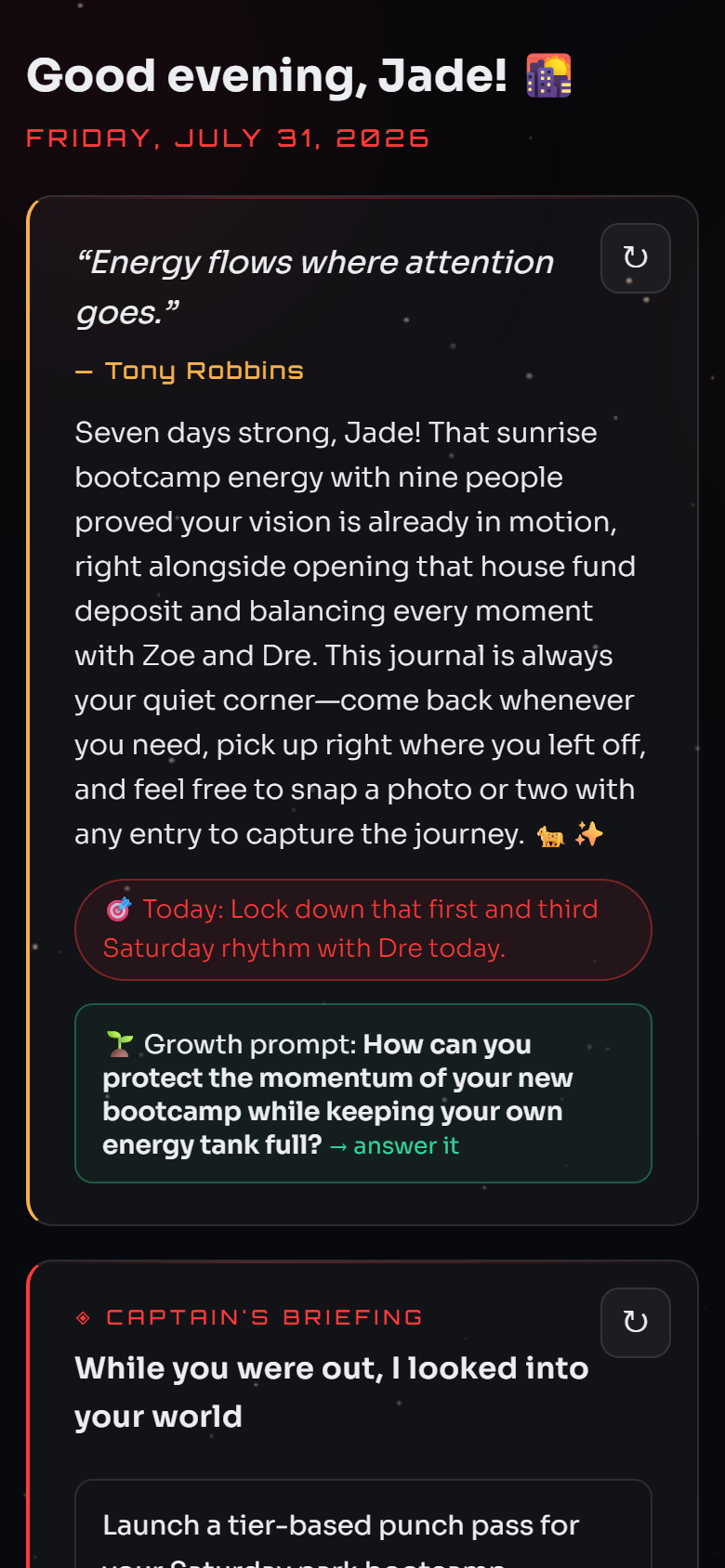
One major challenge of long-term personal archiving is organization. Over years of consistent record-keeping, searching through hundreds of entries for specific patterns can become overwhelming. FivePillar Mindset addresses this by integrating long-term condensed memory and coach chat capabilities directly within a private structure. Instead of exposing your data to open platforms or public feeds, intelligent long-term memory synthesizes your entries into clear trends, habit completion rates, and behavioral insights. You can interact with an AI coach that references your historical context to help you stay accountable to your goals, spot recovery triggers, or refine your daily routines. Ask your coach: 'Based on my entries over the past six months, what recurring obstacles am I encountering when trying to stick to my morning discipline routine?' It is essential to note that AI-driven journaling and coaching are personal development aids designed for accountability and reflection. They do not constitute clinical psychological treatment, medical advice, or therapeutic intervention. For severe mental health or addiction challenges, professional clinical support remains essential.
Follow these practical steps inside FivePillar Mindset to build an enduring snapshot of your life right now.
Your life story is too valuable to leave scattered across rented public servers. Ownership over your history is the foundation of long-term self-mastery.
Take complete ownership of your narrative with FivePillar Mindset. Capture daily voice entries, build lasting habits, and preserve a private, physical record of your life journey.
Create Your Private ArchiveYes. Most major services offer official export mechanisms, such as Facebook's 'Export a copy of your Facebook information' tool [S1] or Google Takeout [S2]. These tools provide raw media files and text records, which serve as helpful personal backups.
Photo libraries store visual imagery, but they lack complete emotional and contextual narrative. A private personal archive connects photos to voice entries, active habit logs, locations, recovery tracking, and structured monthly reviews, giving full meaning to the visual record.
Digital systems can suffer from format changes, lost credentials, or technology shifts. Converting digital records into a physical, high-quality printed yearbook guarantees a permanent tangible heirlooms that exists entirely independent of screens and software.
No. FivePillar Mindset is a self-improvement, habit-building, and personal archiving platform. It provides tools for self-reflection and accountability based on Shaun 'Gotti' Williams' philosophy, but it is not a provider of medical, psychological, or addiction recovery services.
FROM EDUCATION TO PERSONAL ACTION
This article remains public educational content. Inside the private journal, you decide whether to apply it to your own life, save a reflection or discuss it with your coach.