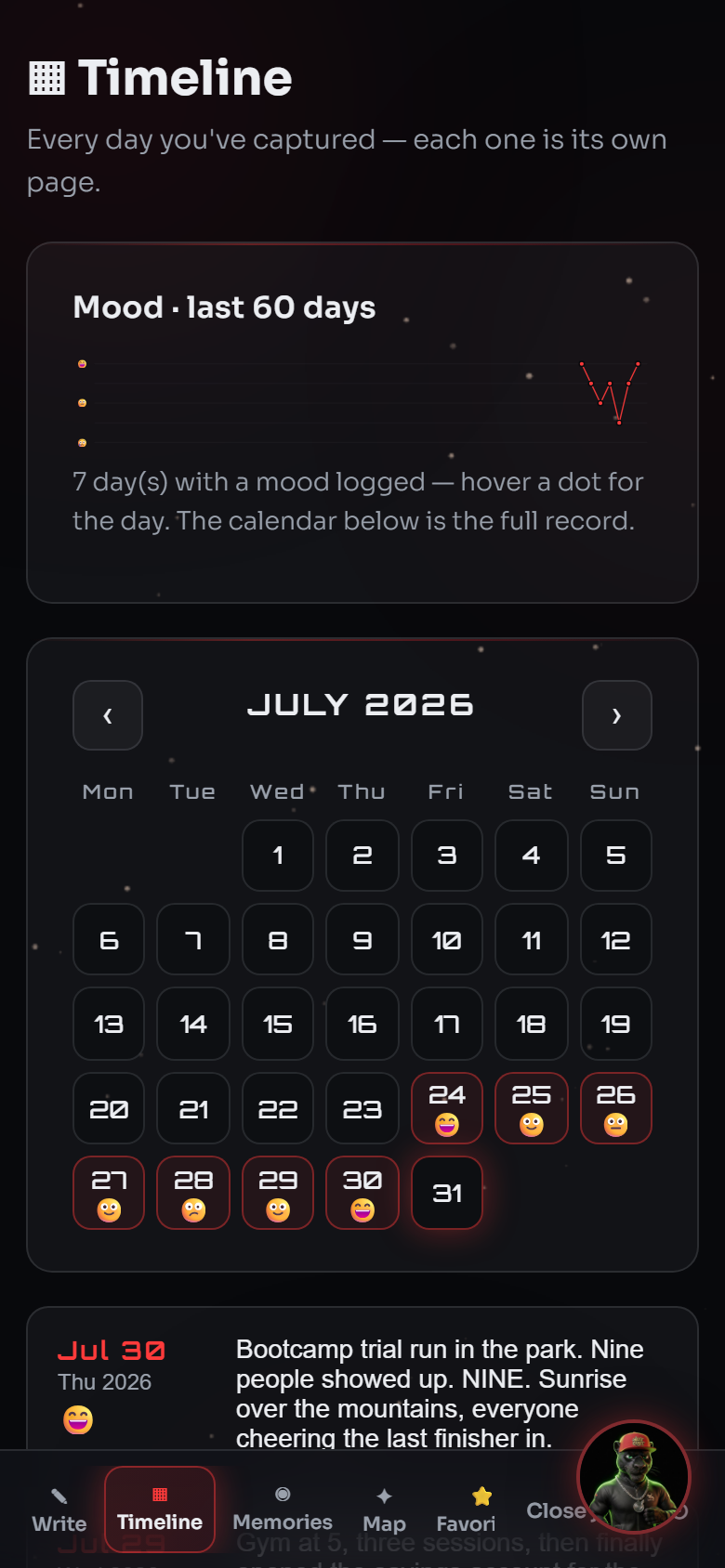
A FIVEPILLAR MINDSET visual created for this guide. The practical journal exercise appears below.
🧭 The Recovery Path · Stage 3 of 6 — Meetings, sponsor and community · See the whole path
Bridging the Gap Between Meetings Through Reflection
Attending recovery meetings provides vital human connection, shared experience, and structured wisdom [S1]. However, many of life's daily pressures—sudden emotional shifts, interpersonal stresses, or fleeting cravings—occur in the ordinary hours between scheduled meetings [S2]. Maintaining a dedicated practice of private writing gives you an immediate outlet to slow down your thoughts, process uncomfortable feelings, and practice rigorous personal honesty before small stresses compound into overwhelming situations [S2, S3].
It is important to emphasize that FIVEPILLAR MINDSET and this guide do not speak for or represent Narcotics Anonymous (NA), nor are they affiliated with NA World Services [S1]. Journaling is strictly a personal self-reflection exercise [S2]. It is never a substitute for attending meetings, working with a sponsor, engaging with the fellowship, or seeking licensed professional medical and mental health care [S1, S2].
The searchable personal journal timeline in FIVEPILLAR MINDSET. Use the workbook actions in this guide to carry an exercise into your own private entry.
Boundaries and Clear Expectations
When using na journaling prompts between meetings, clarity regarding the role of your notebook or digital journal is essential. Writing down your daily experiences allows you to notice recurring emotional patterns and track personal growth over time [S2]. It provides a quiet space to organize your thoughts before calling your sponsor or sharing in a meeting [S1].
However, a journal cannot offer direct accountability, empathy, or living experience. Recovery relies on mutual support and human connection that no software or notebook can replace [S1, S2]. Use your daily journal as a mirror for honest inventory and stress relief, but bring your real-world progress and struggles directly to your recovery community [S1].
Core Prompts for Honesty, Cravings, and Connection
These structured prompts help you inspect your immediate internal state when you are away from a meeting room, allowing you to identify resentment, fear, or physical tension early [S2, S3].
Unfiltered Radical Honesty
What emotion am I avoiding right now, and what am I telling myself about it? Write without editing or judging your feelings to bring quiet resentments into the light [S3].
Craving and Trigger Deconstruction
Am I experiencing an urge or physical discomfort right now? What HALT factor (Hunger, Anger, Loneliness, Tiredness) or environmental trigger preceded this thought [S3]?
Fellowship and Connection Check-In
Have I reached out to another person in recovery today, or am I isolating? Who can I text or call right now to break the cycle of self-reliance [S1, S2]?
Prompts for Gratitude, Amends Readiness, and Next Right Action
Reflecting on constructive steps keeps your attention focused on personal growth, accountability, and practical action throughout the day [S2, S3].
Grounded Daily Gratitude
What are three specific, physical realities in my life today that I am grateful for? Focus on concrete surroundings, safety, or healthy moments rather than generic statements [S3].
Amends Readiness and Awareness
Did my actions or tone harm anyone today? Am I holding onto defensiveness, or am I willing to take responsibility and make things right when appropriate [S1, S2]?
The Next Right Action
What is one simple, healthy task I can perform in the next ten minutes to care for my environment, body, or peace of mind [S3]?
Maintaining Privacy and Data Separation in FIVEPILLAR MINDSET
Honesty requires safety and total privacy. If you worry that your personal daily writing might be compromised or reviewed without your permission, you are less likely to express unfiltered truth [F2]. FIVEPILLAR MINDSET is designed specifically to give you control over your private reflections [F1, F2].
Members choose exactly what they write or save in their private logs, and external articles or educational posts are never automatically copied into your personal journal entries [F2]. When using the interactive coach chat for structured support, the system utilizes a bounded rolling summary capped at 600 words for lasting personal facts while keeping your full private journal entries separate [F3]. Furthermore, draft copy, research text, and assistant prose are strictly excluded from personal memory condensation [F4], ensuring that your reflective space remains entirely your own.
Try This in Your Journal: A 5-Minute Mid-Day Routine
Follow these simple steps inside FIVEPILLAR MINDSET to conduct a fast, grounded mid-day check-in between meetings [F1].
1. Capture Raw Thoughts via Voice or Text
Open a standard private entry in FIVEPILLAR MINDSET and use voice input or typed notes to release whatever emotional noise or pressure you are carrying [F1].
2. Run a 3-Question Honest Inspection
Answer three brief prompts: 'What am I feeling right now?', 'Am I isolating?', and 'What is my next right action?' [S3]
3. Log People or Places in Your Searchable Library
If a specific person, place, or supportive activity helped ground you, save it to your searchable favorites library (covering people, places, activities, and memories) for quick future reference [F5].
4. Schedule Your Meeting or Outreach Action
Close your journal entry by writing down the time of your next scheduled recovery meeting or the name of the sponsor/peer you will call today [S1].
Discipline is not about perfection; it is about building honest habits in the quiet hours when nobody else is watching.
Grounded Discipline and Daily Reflection
Build a Grounded Daily Writing Practice
Explore how FIVEPILLAR MINDSET provides private voice input, recovery-aware habit tracking, and structured personal review tools to keep your daily reflections focused and secure [F1]. Make a note in your journal today or ask your coach for a structured reflection template.
Does this journal replace Narcotics Anonymous meetings or sponsorship?
No. FIVEPILLAR MINDSET and these journaling prompts are self-reflection tools designed for personal organization and stress coping [S3]. They do not speak for NA and are not a substitute for attending meetings, working with a sponsor, engaging in fellowship, or receiving professional treatment [S1, S2].
Are my recovery notes kept separate from coach memories?
Yes. Members control what is saved [F2]. The optional AI coach uses a bounded rolling summary capped at 600 words for essential facts you choose to retain, keeping full private entries separate [F3]. Draft copy, research text, and assistant prose are explicitly excluded from memory condensation [F4].
How can I organize supportive resources in my journal?
FIVEPILLAR MINDSET includes searchable library tools that allow you to catalog and tag supportive people, uplifting music, places, books, activities, and positive memories for quick access when you need encouragement [F5].
Can I capture reflections if I dislike typing on my phone?
Yes. FIVEPILLAR MINDSET supports private voice input so you can speak your reflections naturally whenever you need to clear your mind between meetings [F1].
FROM EDUCATION TO PERSONAL ACTION
Use this insight inside FIVEPILLAR MINDSET
This article remains public educational content. Inside the private journal, you decide whether to apply it to your own life, save a reflection or discuss it with your coach.
Recovery-aware journalUse private daily inventory, milestone reflection and optional program-aware support alongside real-world care.See how this feature works →
One Life Coach Operating SystemThe journal, memory, goals, timeline, map, favorites, coach and books are connected views—not separate journals.Explore the complete system →
Try it without an accountUse fictional sample data to feel the raw-words-to-coaching transformation. Nothing is saved and no paid AI call is made.Open the interactive demo →
Sources & verified facts
Product: A private AI journal with voice input, long-term condensed memory, coach chat, photos, places, habits, recovery-aware support, monthly reviews and a printable yearbook.
Private app behavior: Members choose what they write or save; public articles are not automatically copied into private journal entries.
Coach memory: The coach uses a bounded rolling summary capped at 600 words for lasting personal facts, while full private entries remain separate.
Memory exclusions: Generated drafts, blog copy, scripts, research text and the coach's prose are explicitly excluded from personal memory condensation.
Library tools: The journal supports searchable favorites for people, songs, dishes, recipes, places, books, activities, products and memories.
FIVEPILLAR MINDSET is a private personal journaling and educational tool. It is not affiliated with, endorsed by, or representative of Narcotics Anonymous World Services or any 12-step organization. Journaling tools do not provide medical advice, diagnosis, addiction treatment, or mental health therapy. If you are in crisis or require medical assistance, please contact emergency services or a qualified healthcare professional.