A FIVEPILLAR MINDSET visual created for this guide. The practical journal exercise appears below.
Understanding Financial Avoidance and the Panic Cycle
When bills pile up or income shifts, human instinct often triggers avoidance—leaving unopened envelopes on the counter or avoiding online bank logins. This reaction is natural, but unchecked avoidance creates a feedback loop where uncertainty fuels irrational fear. When you do not know your exact financial standing, your mind fills in the gaps with worst-case scenarios. Facing money stress starts by separating factual reality from emotional narrative. Financial challenges are administrative problems requiring step-by-step attention, not character flaws. According to guidance from the Consumer Financial Protection Bureau, organizing clear financial records is the first structural step toward restoring personal agency and reducing acute financial stress [S1]. By committing to inspect your figures without self-criticism, you quiet the panic signal and prepare your mind to construct an actionable, pragmatic strategy.
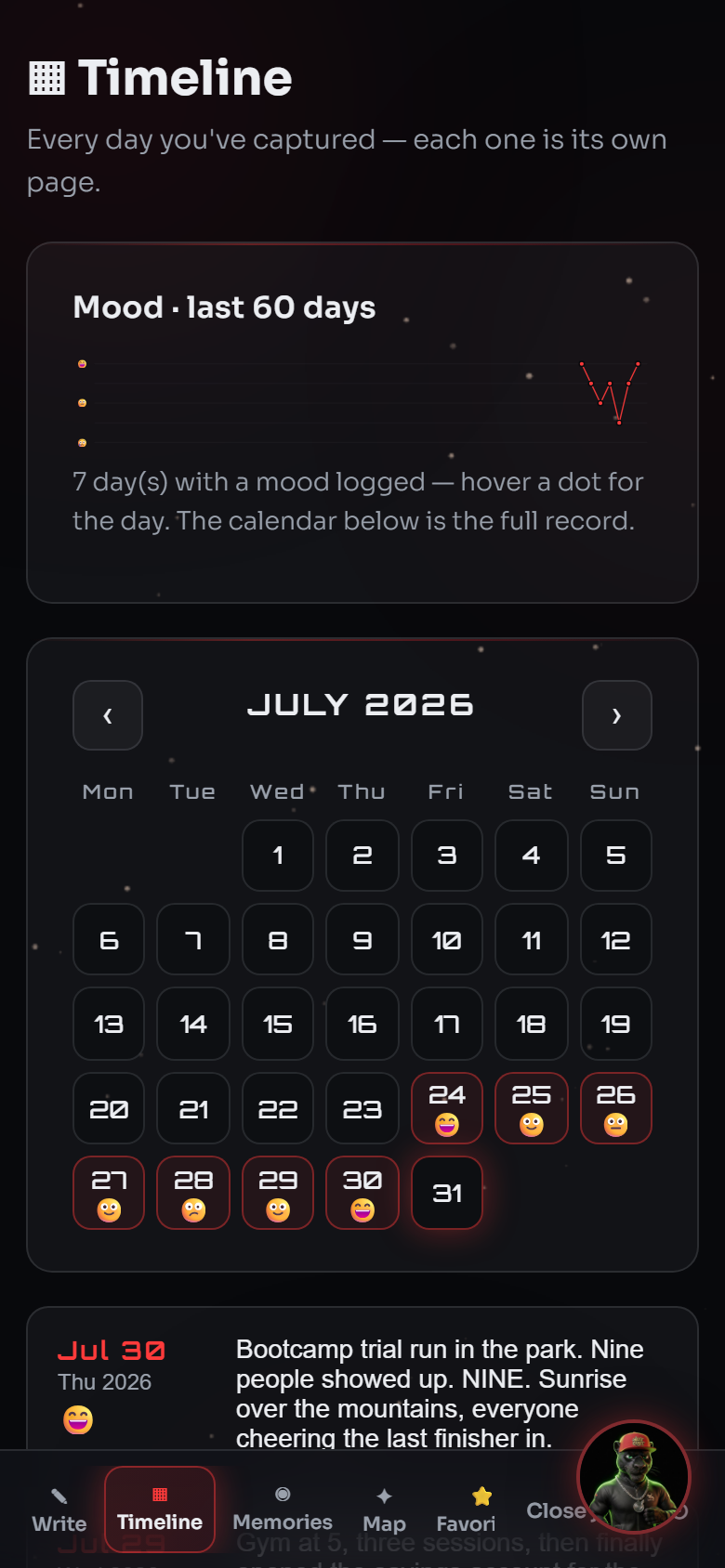
The searchable personal journal timeline in FIVEPILLAR MINDSET. Use the workbook actions in this guide to carry an exercise into your own private entry.
Four Practical Steps to Gather Facts and Restore Control
Transitioning out of financial panic requires a systematic approach. Rather than attempting to solve every financial burden simultaneously, focus on simple, sequential tasks designed to establish clarity.
Compile Your Current Balances
List every active account balance, upcoming bill, and source of income in one neutral document without judging the numbers [S1].
Categorize Core Essentials
Separate fundamental survival needs—housing, utilities, groceries, and necessary transport—from discretionary spending [S1].
Contact Creditors Proactively
Reach out to lenders or service providers before missing a payment date to discuss available hardship options or modified payment plans [S1].
Seek Qualified Guidance
Consult accredited non-profit credit counseling or qualified financial professionals for complex debt restructuring or legal aid [S1].
Prioritizing Core Needs and Communicating Early
When cash flow becomes constrained, defending your basic stability comes first. Your primary focus must remain on core living expenses: safe shelter, food, necessary prescription medication, power, and basic transportation required for work. Non-essential subscriptions, dining out, and luxury expenditures can be paused immediately to preserve liquidity [S1]. Once core obligations are identified, proactive communication becomes your strongest asset. Many individuals delay contacting service providers out of shame, yet lenders and utility agencies frequently offer structured hardship arrangements, deferred payment programs, or reduced rate schedules when notified early [S1]. Leaving creditors uninformed usually limits available remedies and increases penalties. Remember that financial tools and personal journals serve strictly as organizing aids during this process; they help you track dates and clarify thoughts, but direct human communication with creditors produces the practical adjustments you need.
Try This in Your Journal
Journaling offers a structured space to unload anxiety and outline your daily execution plan. The FivePillar Mindset app provides private tools to turn overwhelming financial stress into organized action steps [F1].
1. Unload Anxiety via Voice Input
Use voice input to record your raw thoughts and financial fears freely, letting the app capture your spoken reflections hands-free [F1].
2. Organize Goals and Essential Contacts
Save key budget targets, emergency contacts, or inspiring reminders into your searchable favorites library [F5].
3. Prompt Your Coach for Reflection
Ask your coach: 'Help me organize a non-judgmental plan to audit my daily expenses,' utilizing bounded rolling summaries for personal context [F1][F3].
4. Make a Note About This in Your Journal
Make a note about this in your journal today, establishing a baseline entry to monitor your emotional focus and habit tracking across your monthly review [F1].
Panic treats every dollar as an existential crisis. When you sit down and look at the actual numbers, you strip away the fear and recover your power to act.
Direct Perspective on Discipline
How FivePillar Mindset Keeps Your Personal Journey Secure
Managing personal reflection during stressful life seasons demands strict privacy and tools that respect your boundaries. FivePillar Mindset provides an isolated space to process your habits and mindset without public exposure.
Private Logging Ownership
Members choose exactly what they write or save; public web articles are never automatically copied into personal journal entries [F2].
Bounded Coach Memory
Coach chat memory relies on a bounded rolling summary capped at 600 words for personal facts, while full private entries remain completely separate [F3].
Memory Exclusion Safety
Generated drafts, blog text, research notes, and coach prose are explicitly excluded from personal memory condensation [F4].
Habit & Recovery Tools
Track daily recovery habits, upload photos, record places, and generate monthly reviews or a printable yearbook [F1].
Build the Discipline to Face Any Challenge
Overcoming financial avoidance is a daily practice grounded in honest self-reflection. Use FivePillar Mindset to log your progress, establish strong habits, and keep a permanent, private record of your personal growth.
Can a private journal help resolve financial debt?
A journal cannot resolve debt or provide financial advice, but it helps you process anxiety, track daily action steps, and maintain personal accountability as you work with qualified experts [F1][S1].
Are my private journal entries used to train AI models or summaries?
No. Members retain control over what is saved. Public articles are never auto-copied, and coach memory uses a strictly bounded 600-word summary that excludes research text and drafts [F2][F3][F4].
What should I do first if I am overwhelmed by money stress?
Gather your exact balances without judgment, list your core survival needs like housing and food, and reach out directly to creditors to discuss repayment options [S1].
FROM EDUCATION TO PERSONAL ACTION
Use this insight inside FIVEPILLAR MINDSET
This article remains public educational content. Inside the private journal, you decide whether to apply it to your own life, save a reflection or discuss it with your coach.
Goals and next actionsTurn what this article brings up into a prioritized goal, a supplied deadline and a smaller next step.See how this feature works →
One Life Coach Operating SystemThe journal, memory, goals, timeline, map, favorites, coach and books are connected views—not separate journals.Explore the complete system →
Try it without an accountUse fictional sample data to feel the raw-words-to-coaching transformation. Nothing is saved and no paid AI call is made.Open the interactive demo →
Sources & verified facts
Product: A private AI journal with voice input, long-term condensed memory, coach chat, photos, places, habits, recovery-aware support, monthly reviews and a printable yearbook.
Private app behavior: Members choose what they write or save; public articles are not automatically copied into private journal entries.
Coach memory: The coach uses a bounded rolling summary capped at 600 words for lasting personal facts, while full private entries remain separate.
Memory exclusions: Generated drafts, blog copy, scripts, research text and the coach's prose are explicitly excluded from personal memory condensation.
Library tools: The journal supports searchable favorites for people, songs, dishes, recipes, places, books, activities, products and memories.
FivePillar Mindset is an educational self-reflection and habit-tracking app, not a certified financial advisory, debt counselor, or mental health treatment service. For legal, financial, or clinical advice, consult a licensed professional.