Journaling Family Support and Boundaries in Recovery
A practical guide to writing through complex family dynamics, protecting your privacy, and setting clear boundaries without taking on everyone else's emotional weight.
A FIVEPILLAR MINDSET visual created for this guide. The practical journal exercise appears below.
🧭 The Recovery Path · Stage 5 of 6 — Repairing trust, boundaries and family · See the whole path
Navigating Family Support and Boundaries in Personal Recovery
SAMHSA defines recovery as a process of change through which individuals improve their health and wellness, live a self-directed life, and strive to reach their full potential [S1]. In this process, relationships with family members often require clear boundary setting and honest reflection. Journaling provides a private, structured space to sort through complex family interactions before communicating them out loud. Using a private AI journal with voice input, long-term condensed memory, and recovery-aware support allows you to clarify what you need without feeling obligated to manage the emotional responses of others [F1]. When navigating family support, establishing distinct boundaries protects your personal growth while leaving room for healthy engagement [S1]. Writing down your thoughts helps you distinguish between reasonable boundaries and emotional defense mechanisms, giving you a grounded perspective on family dynamic shifts during your recovery journey [S2].
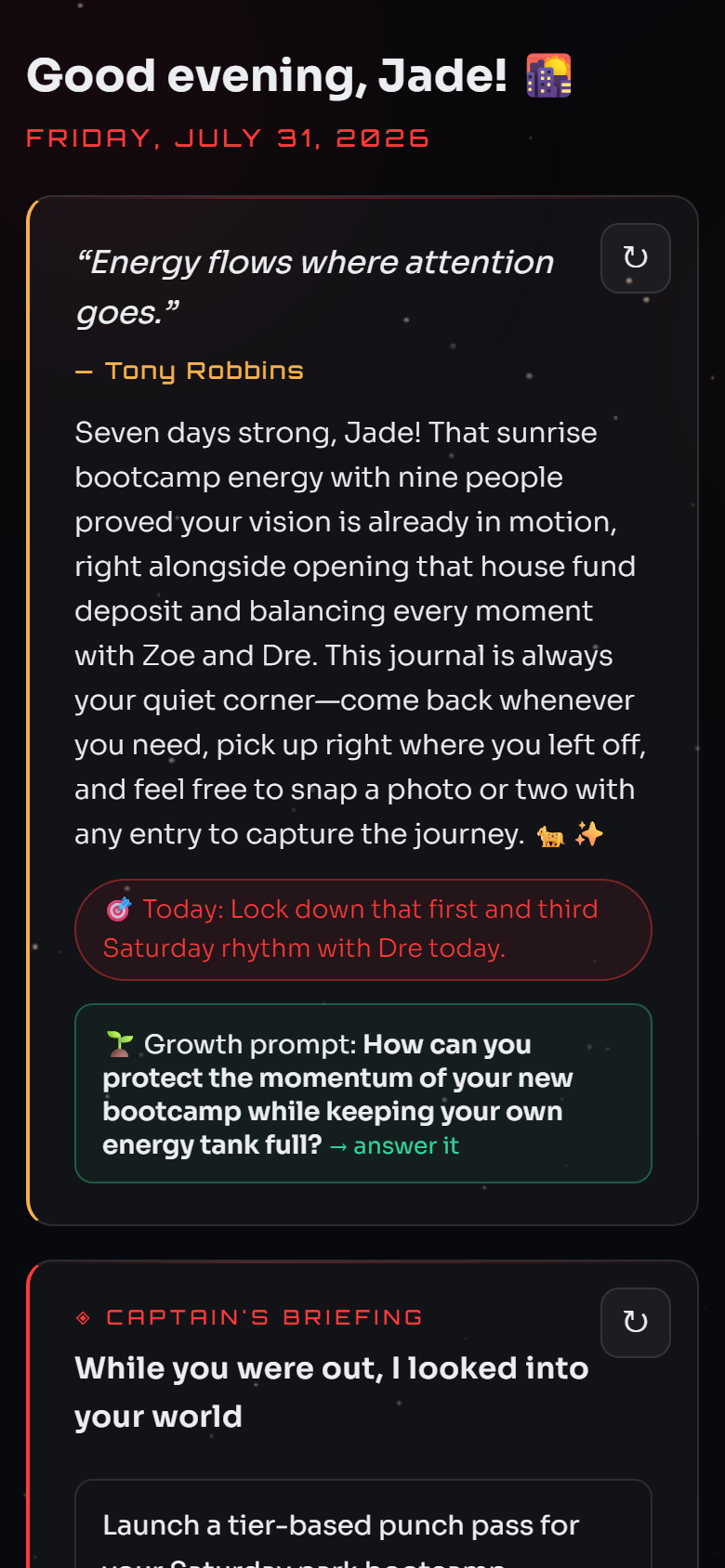
The private daily writing workspace in FIVEPILLAR MINDSET. Use the workbook actions in this guide to carry an exercise into your own private entry.
What to Share versus What Remains Private
Deciding what to communicate with family members requires discernment. You do not owe anyone complete access to every internal thought, past regret, or private milestone in your journal. FivePillar Mindset ensures members choose what they write or save, and public guidance or external articles are never automatically copied into personal entries [F2].
Internal Processing Space
Keep working drafts of emotional reactions, raw fears, and unedited thoughts strictly in your private journal entry. Your journal is your unscreened processing ground [F1].
Actionable Boundary Requests
Share only clear, specific requests regarding your physical environment, schedule, or substance-free spaces with family members when you feel prepared [S2].
Personal Progress Highlights
Choose whether to share high-level habits or monthly review summaries with loved ones, keeping private details safe while showing practical growth [F1].
Try this in your journal
Use this simple step-by-step journaling process in your FivePillar Mindset app to work through a recent family conversation or boundary challenge without absorbing emotional guilt.
1. Voice Record the Raw Event
Use hands-free voice input in your FivePillar Mindset journal to dictate what happened during a family interaction, focusing on facts rather than managing their reactions [F1].
2. Distinguish Requests from Demands
Write down the request you made. A request invites cooperation while respecting their autonomy; a demand attempts to control their reaction [S2]. Make a note about this in your journal to track how clearly you communicate your boundaries [F1].
3. Log People and Places in Your Library
Add family members, supportive mentors, or safe meeting locations into your searchable library tools for people and places to identify positive support nodes [F5].
4. Engage Your Coach Chat
Ask your coach: 'How can I maintain my boundary regarding family gatherings without taking responsibility for their disappointment?' The coach uses a bounded rolling summary capped at 600 words for lasting facts [F3].
Requests versus Demands and Active Listening
Boundaries in recovery center on controlling your own choices, actions, and exposure to triggers, rather than attempting to force family members to think or act differently [S2]. When you state a boundary, formulate it as a clear request for how you need to be treated or what you will do if a situation becomes unsafe or unsupportive [S1]. For example, stating that you will leave an event if alcohol is served sets a clear boundary for your conduct without demanding that relatives alter their host habits against their will. Furthermore, active listening during family conversations does not require adopting their emotional burdens or admitting fault for things outside your self-directed healing process [S1]. By capturing these distinctions in your journal, you can review past conversations during monthly reviews or through your printable yearbook to see how your self-advocacy improves over time [F1].
Practical Support and Qualified Family Resources
Recovery flourishes when surrounded by structured support, but family members may also need independent help, resources, or specialized education beyond what you can provide [S1].
Community Support Groups
Connect family members to SAMHSA resources and local family peer groups so they receive professional guidance independently of your recovery efforts [S1], [S2].
Searchable Resource Tracking
Use your journal's searchable favorites library to store contact details for family counselors, support groups, books, and activities [F5].
Recovery-Aware AI Coaching
Utilize coach chat for real-time guidance on boundary statements while personal generated drafts and research texts remain excluded from long-term memory condensation [F4].
Real discipline in recovery means taking full ownership of your decisions while stepping back from managing everyone else's emotional climate.
Grounded Mindset Principle
Build Your Permanent Record of Recovery and Boundaries
Take control of your growth with a recovery-aware system built for real life. Document your habits, track your boundary decisions with voice entries, review monthly progress, and print a custom yearbook at the end of your year [F1]. Stand firm in your recovery without carrying unnecessary weight.
How does journaling help set boundaries with family during recovery?
Journaling provides a private space to clarify your personal limits, separate your feelings from family reactions, and formulate precise requests rather than emotional demands before speaking [S1], [S2].
What should I keep private in my recovery journal versus sharing with family?
Keep raw unedited processing, past grievances, and personal reflections private in your app [F1]. Share only clear behavioral requests, logistical updates, or high-level milestones when you feel ready, knowing public articles or family expectations are never automatically forced into your private journal entries [F2].
How does FivePillar Mindset handle private coach conversations and memory?
The AI coach uses a bounded rolling summary capped at 600 words for lasting personal facts while full private entries remain separate [F3]. Generated drafts, research text, and coach prose are explicitly excluded from memory condensation [F4].
How can family members get help without relying on my recovery process?
Family members can connect with independent support networks like SAMHSA family resources or peer support groups [S1], [S2]. You can store helpful books, contact details, and support group locations in your searchable favorites library [F5].
FROM EDUCATION TO PERSONAL ACTION
Use this insight inside FIVEPILLAR MINDSET
This article remains public educational content. Inside the private journal, you decide whether to apply it to your own life, save a reflection or discuss it with your coach.
Recovery-aware journalUse private daily inventory, milestone reflection and optional program-aware support alongside real-world care.See how this feature works →
One Life Coach Operating SystemThe journal, memory, goals, timeline, map, favorites, coach and books are connected views—not separate journals.Explore the complete system →
Try it without an accountUse fictional sample data to feel the raw-words-to-coaching transformation. Nothing is saved and no paid AI call is made.Open the interactive demo →
Sources & verified facts
Product: A private AI journal with voice input, long-term condensed memory, coach chat, photos, places, habits, recovery-aware support, monthly reviews and a printable yearbook.
Private app behavior: Members choose what they write or save; public articles are not automatically copied into private journal entries.
Coach memory: The coach uses a bounded rolling summary capped at 600 words for lasting personal facts, while full private entries remain separate.
Memory exclusions: Generated drafts, blog copy, scripts, research text and the coach's prose are explicitly excluded from personal memory condensation.
Library tools: The journal supports searchable favorites for people, songs, dishes, recipes, places, books, activities, products and memories.
Disclaimer: FivePillar Mindset is a personal journaling and educational tool. It does not provide medical, clinical, or psychiatric advice, diagnosis, or treatment. If you or a loved one are experiencing a clinical crisis, please consult a healthcare professional or contact national recovery resources like SAMHSA.