A grounded, five-pillar approach to developing career purpose, setting realistic work boundaries, and tracking personal growth without tying your worth to productivity.
A FIVEPILLAR MINDSET visual created for this guide. The practical journal exercise appears below.
🧭 The Recovery Path · Stage 6 of 6 — Rebuilding a life · See the whole path
Redefining Purpose and Work Beyond Productivity
Re-entering the workforce or reshaping your professional life during recovery presents both opportunity and risk. According to SAMHSA, purpose is one of the four essential dimensions of recovery, encompassing meaningful daily activities such as jobs, volunteer work, caregiving, or creative endeavors, alongside the resources needed to participate in society [S1]. However, rebuilding a career can lead to burnout if self-worth remains tied strictly to output or speed. Using a career purpose journal after recovery allows you to examine your vocational goals through a balanced framework rather than external pressure. Shaun 'Gotti' Williams' Five-Pillar philosophy emphasizes that work is only one part of a grounded life, alongside health, mindset, relationships, and financial discipline. By documenting daily choices, emotional energy, and workplace interactions, you build self-awareness around your true capacity [S1]. This steady observation prevents the common trap of taking on excessive responsibilities early in recovery, helping you rebuild professional confidence while maintaining personal stability.
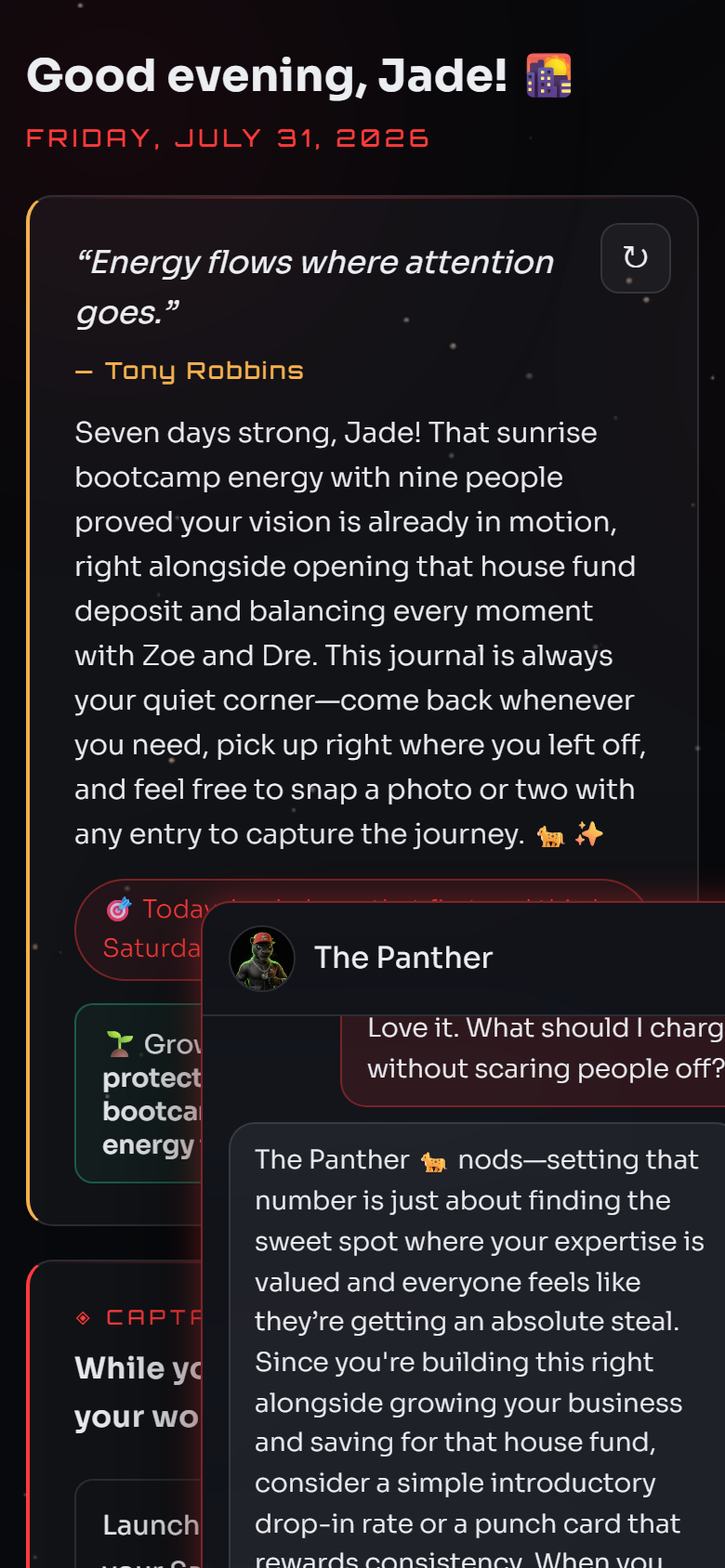
The journal's private AI coach conversation in FIVEPILLAR MINDSET. Use the workbook actions in this guide to carry an exercise into your own private entry.
The Five-Pillar Framework for Vocational Growth
Applying the Five Pillars to your professional journey creates a clear structure for evaluating career decisions, skill development, and personal wellness.
Mindset & Strengths
Focus on genuine skills and intrinsic motivation rather than seeking external validation through overwork.
Health & Boundaries
Set clear limits on work hours and stress to preserve physical and emotional recovery routines [S1].
Relationships & Support
Build healthy workplace connections and leverage external support networks when navigating challenges.
Career & Service
Engage in work, volunteerism, or creative projects that contribute meaningfully to your community [S1].
Financial Stewardship
Manage income and career choices to support long-term independence and personal security [S1].
Try This in Your Journal
To build a realistic career purpose strategy that protects your recovery, open your private AI journal [F1] and complete the following exercise:
1. Record a voice entry describing two professional strengths you feel confident using and one work environment that supports your focus [F1].
2. Document two firm workplace boundaries, such as taking scheduled breaks or ending your workday at a set time, to protect your stamina [S1].
3. Use searchable library tools to catalog mentors, professional resources, or inspiring books that keep you grounded [F5].
4. Schedule a monthly review prompt to assess whether your current workload aligns with your recovery values [F1].
Make a note about this in your journal: Write down three daily tasks that gave you a sense of purpose without causing physical or emotional exhaustion.
Ask your coach: 'Based on my recent entries, what boundaries or work habits seem to best support my daily stability?' [F1], [F3].
Privacy Controls and Memory Exclusions
Maintaining absolute privacy is essential when working through personal career reflections and recovery goals in your journal.
Member Data Ownership
You choose what to write or save; public articles are never automatically copied into private journal entries [F2].
Bounded Coach Memory
The coach uses a bounded rolling summary capped at 600 words for lasting facts, while full entries remain separate [F3].
Strict Memory Exclusions
Generated drafts, blog copy, scripts, research text, and coach prose are explicitly excluded from memory condensation [F4].
Personal Searchable Library
Save and organize favorites for people, places, activities, and memories securely within your private account [F5].
Work is a practical tool to contribute to society and sustain your life; it is never the measure of your dignity or worth as a human being.
Grounding Your Worth
Practical Steps for Rebuilding Career Purpose
Follow this step-by-step process to re-engage with work, develop new skills, and maintain balance throughout your recovery journey.
1. Evaluate Capacity
Assess your energy, health, and routine before applying for positions or accepting new workplace duties [S1].
2. Establish Firm Limits
Communicate schedule availability clearly and avoid overcommitting to overtime or secondary roles.
3. Track Daily Wins
Log concrete progress, completed projects, and positive interactions in your private voice journal [F1].
4. Conduct Weekly Reviews
Reflect on work-related stress, personal boundaries, and skill growth every week to make prompt adjustments.
Start Building Your Career Journal Today
Rebuilding work and purpose after recovery requires honest self-reflection, consistent habits, and absolute privacy. With voice input, recovery-aware coach chat, condensed monthly reviews, and a printable yearbook, FIVEPILLAR MINDSET gives you the tools to document your journey and build a lasting record of your life [F1].
How does journaling help build career purpose after recovery?
Journaling allows you to objectively track your energy levels, identify genuine strengths, and spot warning signs of overwork, helping you build a sustainable career path without risking your recovery [S1].
Is my career and recovery journal text kept private?
Yes. Members control everything saved in their entries. Furthermore, the AI coach memory is capped at a bounded 600-word summary, and external drafts or research text are explicitly excluded from memory condensation [F2], [F3], [F4].
Can journaling replace professional career counseling or clinical care?
No. Journaling is a self-reflection tool for personal growth, habit tracking, and goal alignment. It is not a substitute for clinical therapy, vocational rehabilitation, or medical treatment.
FROM EDUCATION TO PERSONAL ACTION
Use this insight inside FIVEPILLAR MINDSET
This article remains public educational content. Inside the private journal, you decide whether to apply it to your own life, save a reflection or discuss it with your coach.
Recovery-aware journalUse private daily inventory, milestone reflection and optional program-aware support alongside real-world care.See how this feature works →
One Life Coach Operating SystemThe journal, memory, goals, timeline, map, favorites, coach and books are connected views—not separate journals.Explore the complete system →
Try it without an accountUse fictional sample data to feel the raw-words-to-coaching transformation. Nothing is saved and no paid AI call is made.Open the interactive demo →
Sources & verified facts
Product: A private AI journal with voice input, long-term condensed memory, coach chat, photos, places, habits, recovery-aware support, monthly reviews and a printable yearbook.
Private app behavior: Members choose what they write or save; public articles are not automatically copied into private journal entries.
Coach memory: The coach uses a bounded rolling summary capped at 600 words for lasting personal facts, while full private entries remain separate.
Memory exclusions: Generated drafts, blog copy, scripts, research text and the coach's prose are explicitly excluded from personal memory condensation.
Library tools: The journal supports searchable favorites for people, songs, dishes, recipes, places, books, activities, products and memories.
This page is for educational and self-improvement purposes only. FIVEPILLAR MINDSET provides journaling tools and peer-oriented educational frameworks; it does not provide clinical therapy, substance use treatment, or medical advice.